Talisman (Step Up)
The step-up for the day the swell shows up — built for waves with push.
The Talisman is the second board in your quiver — the one you reach for when the buoy reading jumps overnight and your daily driver suddenly feels under-gunned. It's a true step-up shortboard, not a gun: slightly longer and narrower than your everyday HPSB, foiled down through the rails, and pulled in through the tail to give you hold and drive when the wave has real push behind it.
WHAT IT WANTS
Head-high to double-overhead-plus reef and point break. Solid Lowers, Blacks on a winter west, Pipeline-style hollow reef. Bridges the gap between a daily shortboard and a true gun.
SKILL LEVEL
Advanced surfers who already ride a daily shortboard well and want a tighter, more pulled-in shape for serious surf.
WHAT IT'S NOT
Not a small-wave board. Not a grovel. The pulled-in outline and fuller foil under the front foot reward speed and commitment — ride a daily shortboard for clean, smaller days.
HOW IT'S DESIGNED
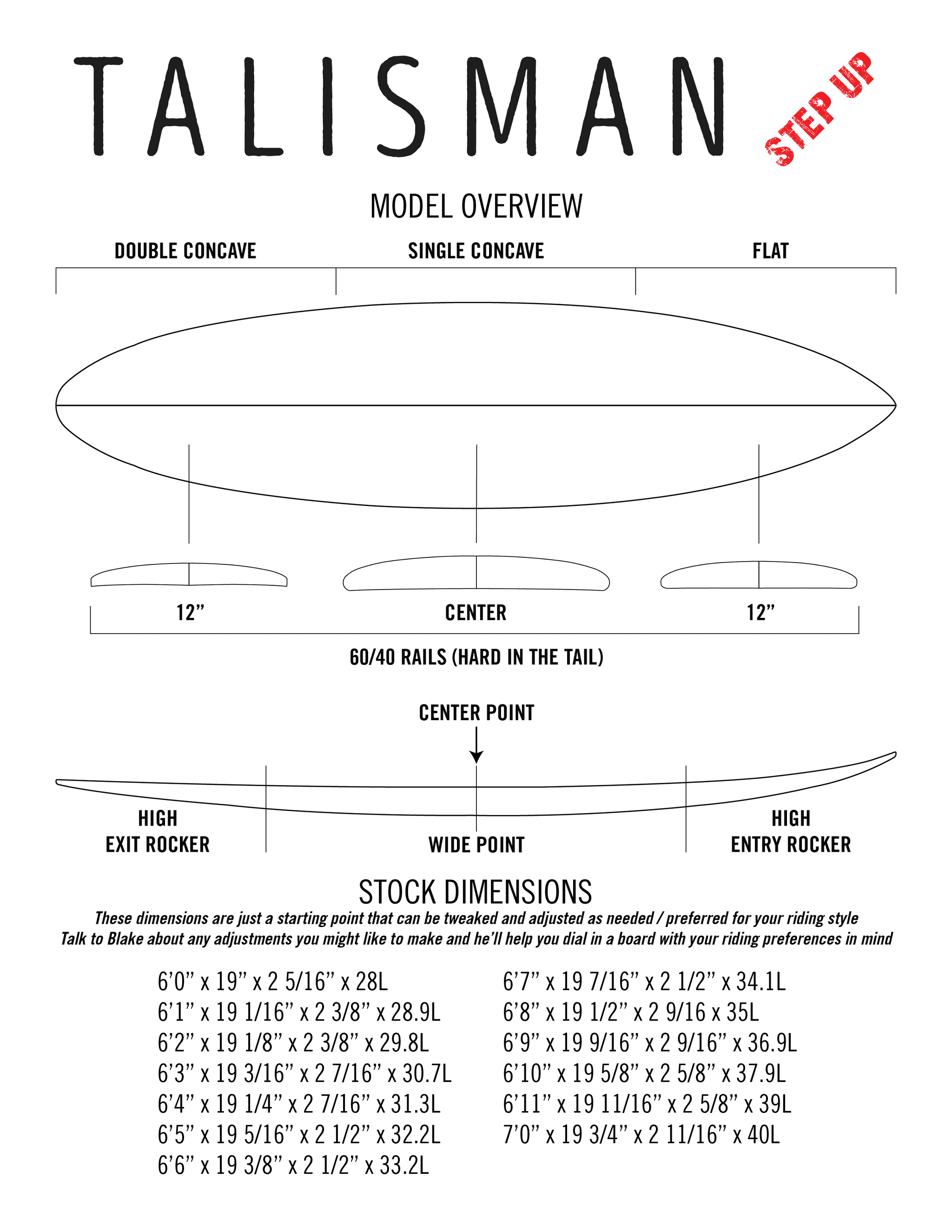
The contour diagram tells the story. High entry rocker through the nose lets you commit to a steeper takeoff without catching a rail; a high exit rocker keeps the tail releasing cleanly through a critical section. The bottom contour transitions from a flat panel through the nose into a single concave under your front foot, then into a deeper double concave behind the fins — the single loads the lead foot through the wide point, the double splits water for drive out of turns when the wave has push behind it. The wide point is centered, not pulled forward — that keeps the board balanced rail-to-rail when the face is moving fast under you.
THE RAILS
60/40 rails through the midsection give you a forgiving rail-to-rail feel through the wide point — important on a step-up because the foiled, narrower outline already asks more of your rail-to-rail transitions than a daily driver does. Hard rails through the last 12" of the tail release water cleanly at speed, which is what keeps the board from washing out when you load it through a bottom turn on a big-wave face. Combined with the centered wide point, the rail treatment is what makes the Talisman feel composed in the kind of overhead surf it's designed for.
THE DESIGN
A modern shortboard built for speed, response, and pressure on the rail. Specific rocker, concave, and outline tuning happen during the custom build conversation — built around your weight, your home break, and the conditions you ride most.
Custom builds are tuned to your dims and surfing style. Talk to Blake about specifics.
+ Not sure which size? Calculate your volume
Volumes are starting points, not rulebooks. Conditions, stance, and style all shift the math.
STOCK DIMENSIONS
Stock dimensions are where we start. Customers tweak width, thickness, and volume to match where they surf and how they ride. On a step-up, most of the conversation is around volume — typically +1.5L to +3L above your everyday HPSB, sized for the wave that's moving faster. Talk to Blake about any adjustments — he'll help you dial in a board with your riding preferences in mind.
Featured sizes cover the core-liters range (28–34L) most of our customers land in. Need a size outside the band? Expand All sizes or start a custom order for a specific dim.
| Length | Width | Thickness | Volume |
|---|---|---|---|
| 6'0" | 19.00" | 2.33" | 28.0L |
| 6'1" | 19.06" | 2.36" | 28.9L |
| 6'2" | 19.13" | 2.39" | 29.8L |
| 6'3" | 19.19" | 2.42" | 30.7L |
| 6'4" | 19.25" | 2.44" | 31.3L |
| 6'5" | 19.31" | 2.47" | 32.2L |
| 6'6" | 19.38" | 2.50" | 33.2L |
| 6'7" | 19.44" | 2.53" | 34.1L |
+ How to think about dims
A step-up is a dedicated second board. That's the whole point. If you size the Talisman like your daily driver, you've bought another daily driver with worse small-wave performance. The right size is typically +0.25" to +0.5" of length, +0.125" of width, and roughly +1.5L to +3L of volume above your everyday HPSB — enough to paddle into a wave that's moving faster, not enough to make the board feel sluggish in the rail-to-rail.
Going too short: you lose the paddle advantage that justifies owning a step-up at all.
Going too long: you've built a mini-gun, and you'll only ride it five days a year.
Going too narrow: the board punches through chop but feels nervous on the rail in the foam-ball recovery.
Going too wide: you've defeated the foiled outline that lets the board hold a steep face. Talk dimensions through with the team in the Board Builder before placing the order.
Don't see your size? Message Blake
FIN SETUP
Quad stock. Futures boxes. Add 5-fin at order time and you can run thruster on the same board too. The shape is tuned for the quad's down-the-line speed and held rail line; the thruster option gives you the predictable tail release for tighter transitions.
Need help picking templates? Read the fin guide, then start a conversation — Blake's happy to talk it through before you lock the build.
Recommended Fins
A modern shortboard wants fins that balance drive and release. Mid-rake (neutral) is the everyday default — runs across most clean shoulder-to-overhead conditions. Lean rake for heavier drawn-out turns; lean pivot for tight, top-to-bottom shortboard surfing.
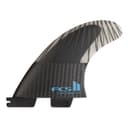
Performer
Medium· PC Carbon + AirCoreAll-Around / Mid-Rake
FCS's most versatile template. Moderate rake and balanced foil keep modern shortboards responsive rail-to-rail. The default if you're running FCS boxes.
Shop FCS II →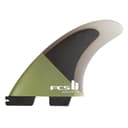
Carver
Medium· Performance CoreDrive / Rake-Leaning
More rake + larger area than the Performer. Holds drawn-out lines through head-high+ surf and rewards committed rail-to-rail carves. Reach for the Carver when the Performer feels too loose.
Shop FCS II →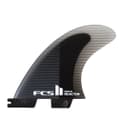
Reactor
Medium· Performance CorePivot / Top-to-Bottom
Upright template with shorter base — releases off the top vertically. The pick when you want tight, snappy shortboard surfing in punchy beach break.
Shop FCS II →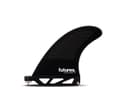
F6 Honeycomb
Medium· HoneycombAll-Around / Mid-Rake
A balanced mid-rake all-rounder — drive plus pivot release in one set. The everyday Futures pick if you want one set that covers most clean to punchy conditions.
Shop Futures →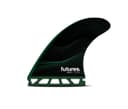
F8 Legacy Series
· HoneycombDrive / Rake-Leaning
Larger area + more rake than the F6. Sustained drive through long-line carves; the right Futures pick when you want hold over loose-tail release.
Shop Futures →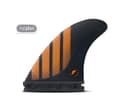
P6 Alpha
· AlphaPivot / Top-to-Bottom
Futures's P-series is their dedicated pivot template — upright leading edge, shorter base, vertical release. Pairs with shortboards built for punchy contest-style surfing.
Shop Futures →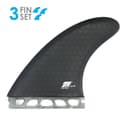
Channel Islands Tri Medium
Medium· HexcoreAll-Around / Mid-Rake
True Ames's CI-collab thruster — hand-foiled fiberglass hexcore tuned for the modern shortboard. Balanced rake plus clean foil response on Futures-compatible boxes.
Shop True Ames →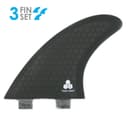
Channel Islands Tri Large
Large· HexcoreDrive / Rake-Leaning
Same CI-collab template scaled up. Larger area + more drive — the True Ames pick for shoulder-to-overhead surf where the Medium feels overwhelmed.
Shop True Ames →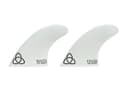
JL Thruster
Medium· Apex Glass-OnAll-Around / Mid-Rake
NVS's Apex-construction thruster — hand-foiled fiberglass with medium rake and a refined foil that generates speed without sacrificing pivot.
Shop NVS →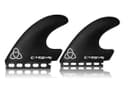
C-Drive Thruster Medium
Medium· ApexDrive / Rake-Leaning
NVS C-Drive cluster — drive-focused fiberglass hand-foil. Holds clean lines through committed turns; the NVS pick when JL feels too neutral and you want more drive off the bottom.
Shop NVS →Not sure which fin template is right for you? Rake, area, flex, and construction all change how a board feels.
Read the Complete Fin Guide →RAKE SPECTRUM
Where each recommended fin sits between drawn-out rake (heavier arcs, more hold) and tight pivot (vertical release, modern shortboard turning). Mid-rake (neutral) is the balanced default.
Drawn-out arcs. Power, hold, drive through long-line turns.
Balanced — drive plus pivot release. The everyday HPSB default.
Tight, vertical release. Modern shortboard pivot off the top.
 FCS IIPerformermid-rake (neutral)
 FCS IICarverrake-leaning
 FCS IIReactorpivot-leaning
 FuturesF6 Honeycombmid-rake (neutral)
 FuturesF8 Legacy Seriesrake-leaning
 FuturesP6 Alphapivot-leaning
 True AmesChannel Islands Tri Mediummid-rake (neutral)
 True AmesChannel Islands Tri Largerake-leaning
 NVSJL Thrustermid-rake (neutral)
 NVSC-Drive Thruster Mediumrake-leaning
On a high-performance shortboard, the spectrum reads: rake = drive priority through long-line carves; pivot = release off the top in steep pockets. Mid-rake (neutral) covers most everyday HPSB conditions.
WHAT TO PICK
Mid-rake (neutral) is the safest first pick on a high-performance shortboard — drive plus pivot release covers most clean shoulder-to-overhead conditions. Lean toward rake for heavier, drawn-out turns when the surf has push and shape; lean toward pivot for tight, top-to-bottom shortboard surfing in punchy beach break. Per-fin picks for this model are coming — message Blake for current recommendations across FCS, Futures, True Ames, and NVS.
SPECS REFERENCE
Full Build Specifications
Stock dimensions, rocker, bottom contour, rail profile, fin positions, recommended fins by brand, and shaper notes for shapers and partner shops.
CONSTRUCTION & PRICING
Starting at $750 + tax
Every Talisman (Step Up) is built to order in San Clemente. Pick a finish tier below; customize further in the next section.
Clear Resin Sanded
4-6 weeks
Functional finish, fastest turnaround. PU blank, polyester resin, sanded off the lam.
Resin Tint Sanded
6-8 weeks
Color both sides of the board in the lam, then sand it smooth.
Tint Gloss + Polish
8-10 weeks
Top-tier finish. Resin tint plus a gloss coat polished to show-quality.
Foam + Resin options
Customize your build
AESTHETIC
STRUCTURAL
25% deposit today, balance due on completion. Timeline reflects current queue — confirmed on order.
GO DEEPER
Every construction call links to a full guide. Start with the essentials:
Board Details Checklist
Everything we need from you to begin your custom build.
Learn more →
Foam & Resin Types
Understanding the materials that make up your board's core and shell.
Learn more →
Fins — A Complete Guide
Single fins to thrusters, base systems, sizing by weight + wave, and how to pick across True Ames, NVS, Futures, and FCS.
Learn more →
Gloss + Polish vs Sanded Finish
The final touch that defines how your board looks and feels.
Learn more →
FREQUENTLY ASKED QUESTIONS
I weigh around 175 lbs and ride a 5'11" daily driver at about 30L. What size Talisman should I get?
Start at a 6'2" by 19 1/8" by 2 3/8" — that's 29.8L. From your 30L daily driver that's almost the same volume but two inches longer, which gives you the paddle advantage into a faster takeoff without making the board feel sluggish. If you mostly want the Talisman for solid overhead with real push (Lowers on a south swell, Mentawais reef passes), bump up one size to the 6'3" at 30.7L. If you want to use it down into the chest-high end of the wave window too, hold the 6'2". Talk it through in the Board Builder — happy to walk through the trade-off with you before you commit.
I see thruster is the default. Is there a reason to upgrade to the 5-fin setup?
Yes — if you ever want to ride the same board as a quad. The 5-fin gives you four extra plugs at build, and you can swap setups between sessions. Thruster is the right default for the wave window the Talisman is designed for: solid overhead with push, where you want the trailer fin's tail hold when a 6ft wall is trying to wash you off the rail. Quad gives you down-the-line speed in long, fast walls — useful at mainland Mexico beachies or North Shore points where the wave is moving fast through a long inside section. The 5-fin is $40 at build for the extra plug pair; if you're sure you'll only ever ride thruster, stick with the default.
How small can I take this board out before it stops working?
The Talisman is built for chest-high through double-overhead. The bottom of the wave window is chest-high — and even there, only when the wave has push behind it. A waist-high windswell session is not what this board is for; the foiled rails and pulled-in tail will feel slow and under-volumed because there's no wave energy to load them. If most of your sessions are waist-to-chest mush, look at the everyday HPSB end of the line — the Talisman won't reward you. The sweet spot is solid overhead with real swell energy: a south swell at Lowers, a long-period north pulse at T-Street.
I'm working my way up from intermediate. Am I ready for a step-up?
The Talisman is built for surfers who already own a daily- driver shortboard and know how to read a steep takeoff. If you're still building confidence in head-high surf on your everyday board, work that progression first — a step-up will outride you in the kind of wave it's designed for, and you'll spend the session feeling like you bought the wrong board. The right time to add a Talisman to the quiver is when your daily driver has started feeling small in overhead surf and you want a dedicated second board for the days the swell shows up. Honest self-assessment beats marketing every time.
How long from order to delivery?
6–8 weeks from order confirmation on the standard build. The $1,100 Premium tier (resin tint plus gloss + polish) adds 1–2 weeks because gloss + polish is its own slow finishing pass. Every Talisman is built to order in our San Clemente shop — 25% deposit at order confirmation, balance due on completion. Timeline reflects current queue and gets confirmed on order; if you have a specific trip date you're targeting, tell us at order time and we'll be honest about whether we can hit it.
How does the Talisman compare to a Channel Islands Step-Up Pro?
Same wave-window framing — both boards are built for the intermediate-to-advanced surfer stepping into overhead surf with confidence. Both run thruster as default and squash tail as the stock option. The Talisman is built to your dimensions in our San Clemente shop, where the Step-Up Pro is built to factory dims. If you've ridden a Step-Up Pro and liked it, the Talisman conversation is "what about that board did you want to tune?" — width, thickness, volume, tail shape, glass schedule are all configurable. Different shaper voice, adjacent product slot, and more knobs to turn at order time.
What's the standard glass schedule, and should I go heavier?
Standard is 4oz S-cloth + 4oz warp on the deck, 4oz S-cloth on the bottom — the modern shortboard schedule, optimized for performance and weight. For the bigger end of the wave window — a true overhead-and-up customer — stepping the deck up to 6oz + 4oz adds durability for the kind of beating a step-up takes per session in real overhead surf. The trade-off is roughly half a pound of weight, which slightly works against the paddle advantage you bought the step-up for in the first place. The right answer depends on where you sit in the Talisman's wave window: optimize for the lower end (chest-high through head-high+) and stay 4S+4W; optimize for the upper end (solid overhead and up) and bump to 6+4.
I noticed on the contour diagram that the wide point is centered and the bottom goes flat through the nose into single, then double concave at the tail. Why that combination?
A centered wide point keeps the board balanced under your feet — you turn the Talisman from the hip, not from muscular input. On a step-up, where you're already asking the board to go faster than your daily driver, a centered wide point is what stops the board feeling pushed forward and nervous on the rail. The flat panel through the nose handles chop on the paddle in (and on the takeoff line into a section); the single concave under your front foot loads the lead foot through the wide point; the deeper double concave behind the fins splits water for drive out of turns. Pair that with the high entry rocker for steep takeoff confidence and you've got a hydrodynamic story that's tuned for speed and hold in waves with real push behind them — not for looseness in soft surf.
Source notes
- Q1 sizing example uses real numbers from `Boards/talisman-step-up.md` §"Stock Dimensions Summary" + the contour-diagram-derived stock dim table in `Boards/talisman-step-up.page-copy.md` §5. - Q2 quad/5-fin framing pulled from `Boards/talisman-step-up.md` §"Fin Scope" — `[BLAKE: ?]` resolves to "yes, offered" in this draft; if Blake rules quad out, swap Q2 for a "what if I want a single-fin configuration?" frame and answer "not offered on the Talisman, look at the longboard line if that's what you want." - Q3 + Q4 wave-window / skill-level framing pulled directly from `Boards/talisman-step-up.md` §"Voice + Positioning Summary". - Q5 turnaround pulled from `Boards/talisman-step-up.construction.md` §2. - Q6 competitor frame: per voice rules, the answer references CI by name (the customer asked about a specific CI model — answering with pure abstraction would be evasive) but does NOT compare a Lundquist model to another Lundquist model. - Q7 glassing answer pulled from `Boards/talisman-step-up.construction.md` §6 — preserves the `[BLAKE: ?]` trade-off framing rather than claiming a single right answer. - Q8 contour-derived design question replaces a generic "demo policy" question per the polish brief rule (contour PNG exists → swap one generic Q&A for a contour-specific one). The hydro story is sourced directly from the Vision read of the contour PNG during the Polish 09 pass.
MORE SHORTBOARDS
EXPLORE THE LINEUP
Innuendo
shortboard
Salt Burn
twin fin
Spectre
mid length
Fantasma
longboard
Scorpio
shortboard
Talisman (Mini Gun)
gun
Dutchman
glider
Rage
wake surf
2nd to None
shortboard
Suds
twin fin
Esplanade
mid length
Black Pearl
longboard
Talisman (Step Up)
shortboard
Talisman (Gun)
gun
Wake Surf #2
wake surf
Gumball
shortboard
Revenant
twin fin
Sea Bottom
shortboard
Lunada
longboard
Five Horizons
shortboard
Pin Twin
twin fin
Whip-Stitch
mid length
Big Joe
longboard
Wanted
shortboard
Duppy
twin fin
Serenata
mid length
Legacy
longboard
Gold
shortboard
Lucid
twin fin
Hiatus
mid length
Magic Carpet
longboard
Moon Shine
shortboard
Boomerang
twin fin
Apparition
shortboard
Half-Moon
twin fin
Bang!
shortboard
Aardvark
twin fin
Lasso
shortboard
Acid-Drop
twin fin
Popsicle Stick
shortboard
Big Buoy
shortboard
Pegasus
longboard
COMPLETE THE QUIVER
“Surf Everyday” means a board for every condition. Your Talisman (Step Up) covers chest-overhead through double-overhead— here's what rounds out the quiver.

Innuendo— Shortboard
Sister shortboard in the Lundquist line — different rocker, foil, and outline character. See the Innuendo page for the full breakdown.
Learn more →

2nd to None— Shortboard
Sister shortboard in the Lundquist line — different rocker, foil, and outline character. See the 2nd to None page for the full breakdown.
Learn more →

Gumball— Shortboard
Sister shortboard in the Lundquist line — different rocker, foil, and outline character. See the Gumball page for the full breakdown.
Learn more →
Building a quiver around the Talisman (Step Up)? Start a conversation — we'll build the right boards for how and where you actually surf.
More boards live in the website catalog than at the shop. Visits are by appointment — text or call (949) 750-5067 to look at boards in person or start a custom build.
READY TO START?
Every Talisman (Step Up) is built to order in San Clemente — 4–6 weeks on clear-sanded, 6–8 weeks gloss and polish, 8–10 weeks tint-sanded. 25% deposit.
Shop: 106 W Mariposa Unit B, San Clemente, CA 92672
By appointment · 8am–8pm daily · (949) 750-5067