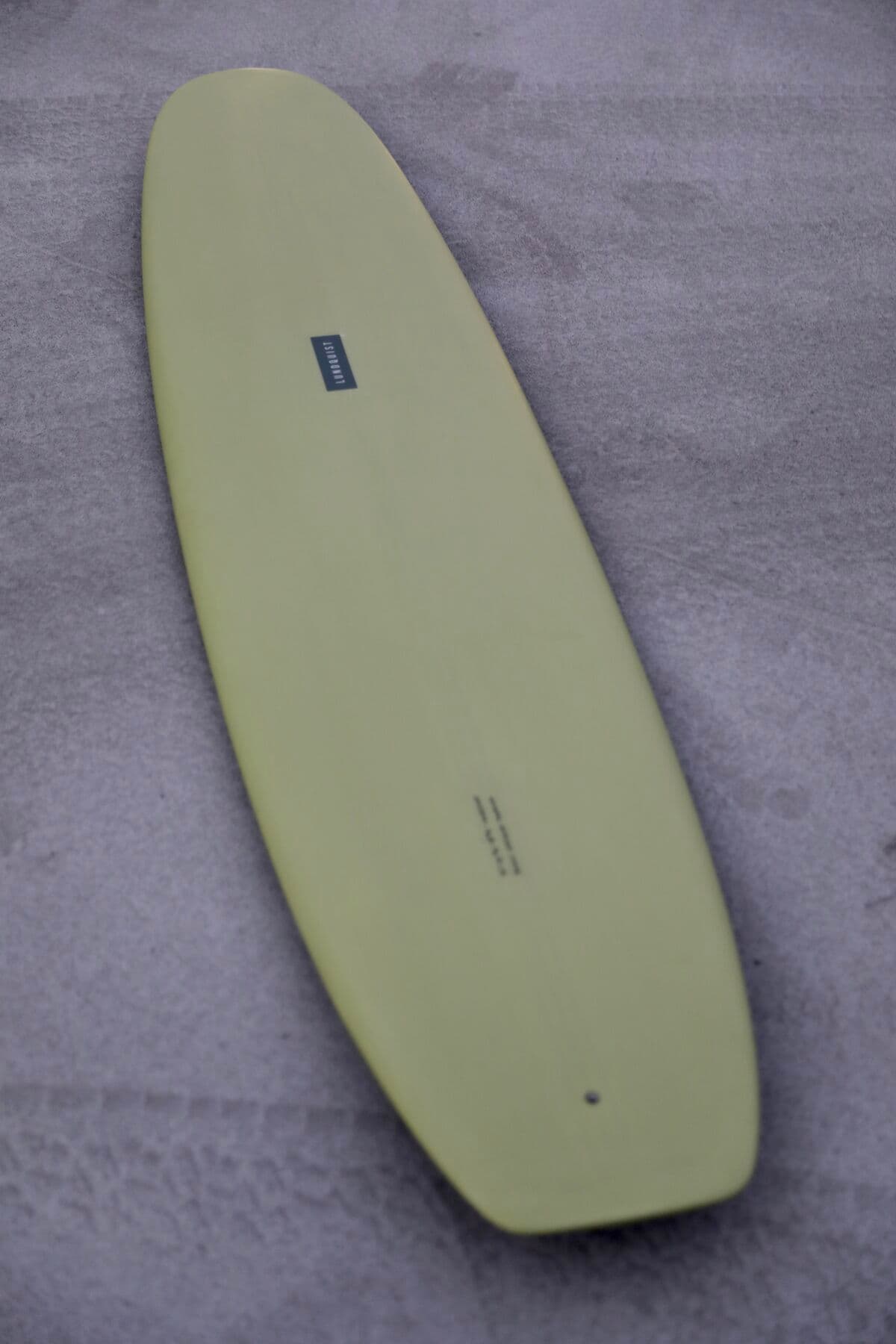
The finish is literally the final coat on your board. It determines whether your board is shiny and protective or matte and lightweight. This choice affects both aesthetics and weight.
Gloss + Polish
What it is: A glossy resin layer on top of the fiberglass, then sanded and polished to a mirror shine.
Appearance: Shiny, reflective, premium. Colors pop and look incredibly vibrant. Your board will look fast just sitting in the sun.
Feel: Smooth, almost silky. Makes the board look professional and finished.
Weight: Adds about 1-2 lbs compared to sanded finish. This is the trade-off.
Durability: Extra protection from UV and minor dings. Harder to repair seamlessly if damaged (glossy finish shows every repair line).
Cost: +$200 add-on to your board price
Best for: - Longboards (extra weight helps with glide and performance) - Mid-lengths (weight is less critical than shortboards) - Wall hangers and display boards (looks incredible) - Signage and promotional boards - Surfers who don't mind the extra weight and love the look
Blake's personal preference: He loves gloss + polish. It's what he rides most often.
Sanded Gloss
What it is: A gloss resin layer is applied just like a full gloss + polish, but instead of being polished out to a mirror it's sanded matte. The board has the gloss layer on top — so it looks slightly deeper than a raw sanded finish — without the high-shine reflection of a polished board.
Appearance: Subtle. Less reflective than gloss + polish, more refined than pure sanded. The color reads with a hint of depth from the gloss coat underneath.
Best for: Surfers who want the protection of a gloss layer without the mirror look. A middle ground when full gloss + polish feels too flashy and pure sanded feels too raw.
Sanded Finish
What it is: The board is sanded to a matte finish — no glossy layer on top. Clean, simple, done.
Appearance: Matte, understated, modern. The board looks minimal and clean. Colors are visible but not shiny.
Feel: Slightly textured, organic, less "manufactured."
Weight: Lighter than gloss + polish (saves 1-2 lbs). This matters for shortboards and twins.
Durability: Less UV protection, but simpler to repair (sanded finish doesn't show repair lines as obviously). More prone to color fading over time.
Cost: Included in base board price
Best for: - Shortboards (weight savings matter) - Twin fins (keep them light) - Surfers who prioritize performance over appearance - Boards that will see regular use and need repairs eventually
The Practical Choice
For most surfers at most breaks, sanded finish is the practical choice for shortboards and twins — you save weight and the board still looks beautiful.
If you're building a special board, a mid-length, or a longboard you'll cherish, gloss + polish makes it feel premium and makes the colors really sing.
Blake's advice: If you're not sure, go sanded for performance boards and gloss + polish for anything else.