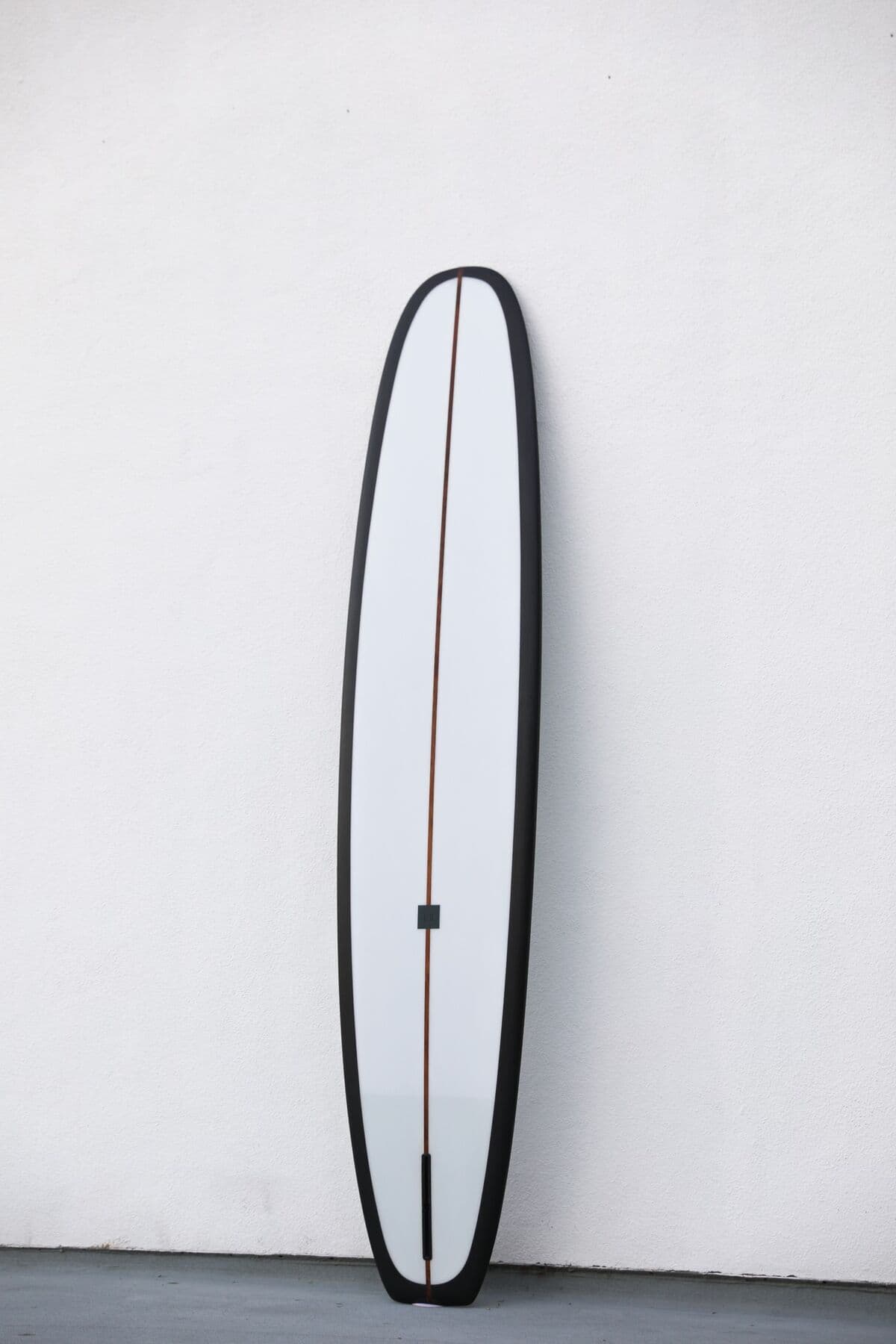
An airbrushed design (airspray) is custom artwork painted on your board after the resin tint. It's completely different from the resin color — you can do an airspray on top of any tint. This is where truly unique, one-of-a-kind boards are born.
What's an Airspray?
An airspray is hand-painted artwork applied with an airbrush gun. It can be anything from simple pinlines and geometric designs to full landscape art. The only limit is your imagination and your budget (more complex work costs more).
Airspray vs Resin Tint
Resin Tint: Solid color throughout the board, applied during the glassing process. Limited to one or two colors typically.
Airspray: Custom painted design on top, usually after the board is complete. Can be multi-color, detailed, photorealistic, abstract, or anything in between.
Many surfers do both — a colored resin tint as the base, then an airspray design on top for maximum impact.
Pricing
Airsprays typically range from $50 for simple designs to $100+ for complex, detailed work. The cost depends on: - Complexity of the design - Number of colors - Coverage area (full deck, tail only, sides, etc.) - Level of detail required
Design Inspiration
Blake's airspray guy is Barry Snyder, and he's incredible. If you need ideas, check out: - @avinamark on Instagram — surreal, detailed airspray work - @ovrspra on Instagram — modern, graphic airspray designs
You can also bring your own design reference, tell Barry what you want, or work with him to create something original.
Popular Airspray Styles
The galleries below split a mix of past Lundquist airsprays into broad style buckets. Click any image to enlarge and see the detail.
Pinlines
Thin contrasting lines applied with an airbrush gun, often running rail-to-rail or nose-to-tail. The simplest form of airspray and the most popular — clean, classic, and pairs well with any resin tint underneath.
Abstract
Geometric patterns, flowing shapes, color fades, and resin-pour-style work. Anything where the design isn't trying to depict a specific image — it's about color, line, and movement.
Figurative
Full designs that include a recognizable image — characters, faces, scenes, or detailed reference imagery. The most labor-intensive style and the most personal.
Signage-Style
Branded boards built for shops, businesses, or events. Custom logos, brand colors, and clean type — the most common ask for our company signage builds.
Solid-Color Base (Pre-Airspray)
Boards with a solid resin tint and minimal or no airspray on top — useful as a reference for what the underlying base looks like before custom artwork is added. Many of these started as a solid resin color and a future customer added an airspray on top.
The Process
- Choose your board design — color, tint, stringer, finish — everything under the airspray.
- Describe or share reference photos for the airspray itself. The clearer your reference, the closer the final result will be to what you pictured.
- Barry quotes the price based on complexity, colors, and coverage.
- After the board is glassed and the resin tint is cured, Barry applies the airspray.
- The board comes back to us for the final gloss + polish or sanded finish. The airspray gets sealed under the finish coat so it stays protected for the life of the board.
Most airsprayed Lundquist boards end up as conversation pieces — at the beach, at the shop, and on the rack above someone's garage workbench. If you want a board that's unmistakably yours, this is the move.