
Big Joe
Shortboard performance, scaled up — not slowed down.
Big Joe is built for the surfer who has spent too many sessions stuck between a 30-liter performance shortboard that won't paddle and a mid-length that won't fit between the sections at Lowers on a chest-high south. The brief is simple: keep the rocker, the foil, and the tail of a contemporary high-performance shortboard, then carry it on enough volume that a 200-pound rider catches the same waves the 160-pound rider catches on the next peak over.
WHAT IT WANTS
Knee-to-shoulder-high glide — soft point breaks, summer beach break, lazy reef. San Onofre, Doheny, the inside section at Cardiff Reef. Built for gliding lines, drawn-out cutbacks, and noseriding when the wave allows.
SKILL LEVEL
All skill levels — from first-board beginners to advanced longboarders working on cross-step and noseriding.
WHAT IT'S NOT
Not a high-performance shortboard. Not built for vertical surfing or critical sections. Heavy storm surf and hollow reef are out of scope — this is a glide board first.
THE DESIGN
The design starts from a modern performance shortboard outline — moderate nose-to-tail rocker, a low-entry into a full-length single-to-double concave, a squash tail with a clean release point — and scales the foam vertically rather than rounding the outline into a hybrid. The result floats a heavier rider, paddles into Salt Creek peaks earlier, and still draws shortboard lines once you're standing up. There is no compromise into fish territory, no widening of the nose to fake paddle power, no loss of the through-rail bite a real shortboard needs to surf vertically.
WHERE IT WORKS
Big Joe lives at home in California summer beach-break — Salt Creek, Trestles, T-Street on a clean morning — and travels well to mainland Mexico and Indonesia, where heavier riders have historically been forced onto step-ups they don't want. It is not a beginner board and not a small-wave step-down. It is a shortboard for surfers who already know what shortboard surfing feels like and want their daily driver to actually fit them.
THE RAILS
Full 50/50 rails through the body for trim hold. Soft tucked rails through the tail release water cleanly as you walk back to drive off the wave.
Custom builds are tuned to your dims and surfing style. Talk to Blake about specifics.
STOCK DIMENSIONS
Stock dimensions are where we start. Big Joe sizes cluster in the 28–35-liter range — the shortboard band you'll actually find under most modern performance shortboards on the rack — and extend up through the high 30s and low 40s for riders who need it. Customers tweak width, thickness, and volume to match where they surf and how they ride. Talk to Blake about any adjustments you'd like to make — he'll help you dial in a board with your riding preferences in mind.
| Length | Width | Thickness |
|---|---|---|
| 9'0" | 22 ¼" | 3" |
| 9'1" | 22 ⁵⁄₁₆" | 3" |
| 9'2" | 22 ⁷⁄₁₆" | 3 ¹⁄₁₆" |
| 9'3" | 22 ½" | 3 ¹⁄₁₆" |
| 9'4" | 22 ⁹⁄₁₆" | 3 ¹⁄₁₆" |
| 9'5" | 22 ¹¹⁄₁₆" | 3 ⅛" |
| 9'6" | 22 ¾" | 3 ⅛" |
| 9'7" | 22 ¹³⁄₁₆" | 3 ³⁄₁₆" |
| 9'8" | 22 ¹³⁄₁₆" | 3 ³⁄₁₆" |
| 9'9" | 22 ⅞" | 3 ¼" |
| 9'10" | 22 ¹⁵⁄₁₆" | 3 ¼" |
| 9'11" | 22 ¹⁵⁄₁₆" | 3 ⁵⁄₁₆" |
| 10'0" | 23" | 3 ⁵⁄₁₆" |
| 10'1" | 23 ¹⁄₁₆" | 3 ⅜" |
| 10'2" | 23 ³⁄₁₆" | 3 ⅜" |
| 10'3" | 23 ¼" | 3 ⁷⁄₁₆" |
| 10'4" | 23 ⁵⁄₁₆" | 3 ⁷⁄₁₆" |
| 10'5" | 23 ⁷⁄₁₆" | 3 ½" |
| 10'6" | 23 ½" | 3 ½" |
| 10'7" | 23 ⁹⁄₁₆" | 3 ½" |
| 10'8" | 23 ⁹⁄₁₆" | 3 ⁹⁄₁₆" |
| 10'9" | 23 ⅝" | 3 ⁹⁄₁₆" |
| 10'10" | 23 ¹¹⁄₁₆" | 3 ⁹⁄₁₆" |
| 10'11" | 23 ¹¹⁄₁₆" | 3 ⅝" |
| 11'0" | 23 ¾" | 3 ⅝" |
+ How to think about dims
Length. Sizing up a half-inch in length and two liters in volume buys you earlier paddle into shoulder-high Lowers peaks and more forgiveness when a section runs ahead of you, but it adds swing weight and makes the board harder to throw vertically off the lip. Sizing down does the opposite: tighter arcs, sharper release at the top, but you'll be the rider who watches the set go through.
Width. Narrower = holds a line in clean, fast waves; faster rail-to-rail. Wider = paddles better, more stable in softer surf, sits flatter on rail.
Thickness / volume. For most riders in the model's target weight range, the right answer is whatever volume sits ~10% above your performance-shortboard daily driver — same length, more foam under the chest. Heavier riders who already know they paddle slow should size up in length first, then volume. Riders coming back from a layoff should size up in volume but hold the length.
Between sizes? We usually size up in volume (not length) for softer waves, and down in volume for overhead surf with real push.
Don't see your size? Message Blake
FIN SETUP
Single fin only. 10.5" Stavron long box. The Stavron box is the longboard standard — runs longer, deeper fins than a standard FCS or Futures system, and gives you full fore-aft tuning for noseriding vs trim. We don't offer 2+1 or thruster on this shape.
Need help picking templates and brands? Read the fin guide, then start a conversation — Blake's happy to talk it through before you lock the build.
Recommended Fins
Longboards live in the rake band. SINGLE FIN templates ONLY. RAKED templates (rake / rake-leaning / mid-rake) require minimum 9.75" length per the Lundquist standard — drawn-out arcs that hold noseriding lines and trim through the wave. PIVOT-template longboard fins are acceptable at any length but ride differently — looser tail, less drawn-out arcs, more responsive (the rule auto-attaches explanatory copy to those picks so customers understand they're choosing a different riding style). LS-FIX-LONGBOARD-RAKE-PIVOT-AND-GLIDER-PHILOSOPHY (May 9, 2026) refined V4's blanket ≥9.75" rule.
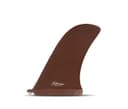
Rudder 10
10"· HoneycombLongboard Single / Mid-Rake
Futures's 10-inch longboard template — drawn-out arc with a clean foil. Pairs well with traditional longboards that want trim hold plus a touch of drive.
Shop Futures →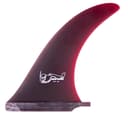
Greenough 4-A
9.75"· Solid FiberglassClassic Single / Mid-Rake
The classic Greenough longboard template — hand-foiled fiberglass that holds drawn-out arcs across the face. The True Ames pick when you want pedigree and feel.
Shop True Ames →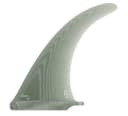
PHD Volan
10"· VolanPerformance Single / Rake-Leaning
Phil Edwards-template Volan single — long rake, drawn-out arc, pure trim feel. The drive-focused alt to the 4-A for surfers who want to turn harder.
Shop True Ames →Not sure which fin template is right for you? Rake, area, flex, and construction all change how a board feels.
Read the Complete Fin Guide →RAKE SPECTRUM
Where each recommended fin sits between drawn-out rake (heavier arcs, more hold) and tight pivot (vertical release, modern shortboard turning). Mid-rake (neutral) is the balanced default.
Drawn-out arcs. Power, hold, drive through long-line turns.
Balanced — drive plus pivot release. The everyday HPSB default.
Tight, vertical release. Modern shortboard pivot off the top.
- FCS IICustom — message Blakerake
 FuturesRudder 10mid-rake (neutral)
 True AmesGreenough 4-Amid-rake (neutral)
 True AmesPHD Volanrake-leaning
- NVSCustom — message Blakerake
On a longboard, the spectrum reads: rake + flex = trim, hold, and noseride stability. Pivot-leaning fins are personal-preference territory — they trade drawn-out arcs for a looser, more responsive feel. A different riding style than the classic raked single.
WHAT TO PICK
Longboards live in the rake band. SINGLE FIN templates only. RAKED templates require minimum 9.75" length per the Lundquist standard — drawn-out arcs that hold noseriding lines and trim through the wave. PIVOT-template longboard fins are acceptable at any length but ride differently — looser tail, less drawn-out arcs, more responsive. Per-fin picks for this model are coming — message Blake for current recommendations.
SPECS REFERENCE
Full Build Specifications
Stock dimensions, rocker, bottom contour, rail profile, fin positions, recommended fins by brand, and shaper notes for shapers and partner shops.
CONSTRUCTION & PRICING
Starting at $750 + tax
Every Big Joe is built to order in San Clemente. Pick a finish tier below; customize further in the next section.
Clear Resin Sanded
4-6 weeks
Functional finish, fastest turnaround. PU blank, polyester resin, sanded off the lam.
Resin Tint Sanded
6-8 weeks
Color both sides of the board in the lam, then sand it smooth.
Tint Gloss + Polish
8-10 weeks
Top-tier finish. Resin tint plus a gloss coat polished to show-quality.
Foam + Resin options
Customize your build
AESTHETIC
STRUCTURAL
TAIL VARIANTS
25% deposit today, balance due on completion. Timeline reflects current queue — confirmed on order.
Boards we've built
Recent customer builds — every Big Joe dialed to the rider.
1022204AT — Will Lam (9'4 Clear G+P Black Wedge)
1032204AT (1) (9'5 Wedge Checker Airspray Swirls)
1072204AT — Noah Jenson (9'6 Tan with Black Wedge)
122119JLY (9'9 Darkwood Stringer Clear G+P)
1532215AT (9'2 Colorful Stringer G+P)
1712219AT — Jack Sanofsky (says 1072204AT) (9'7 Green G+P 2-in Balsa)
382215FY — Myran Mahroo (9'5 Midnight Blue)
632201MY (9'9 Green)
672212MY (10'7 Tan Bottom Clear Deck)
982207JLY (1) — Daniel Kelley (10'2 2in Balsa Clear Simple)
GO DEEPER
Every construction call links to a full guide. Start with the essentials:
Board Details Checklist
Everything we need from you to begin your custom build.
Learn more →
Foam & Resin Types
Understanding the materials that make up your board's core and shell.
Learn more →
Fins — A Complete Guide
Single fins to thrusters, base systems, sizing by weight + wave, and how to pick across True Ames, NVS, Futures, and FCS.
Learn more →
Gloss + Polish vs Sanded Finish
The final touch that defines how your board looks and feels.
Learn more →
FREQUENTLY ASKED QUESTIONS
Sizing
Q: What size Big Joe should I order if I'm 6'1" and 215 pounds and my daily driver is a 6'2" × 19 5/8" × 2 5/8" performance shortboard?
A: Start the conversation around the same length you're already riding — 6'2" — but bump the volume up roughly 10%. So if your daily driver is 31 liters, look at the 33–34L row of the Big Joe table at the same length. The point isn't to ride a longer board; it's to ride a board with the right volume under your chest. If you already know you paddle slow even at the right volume, then size up in length first (6'3" or 6'4") and pick the volume that gets you into waves earlier. I'd rather you over-paddled into a Salt Creek wave than under-paddled and watched the set go through.
Fin setup
Q: Should I order the Big Joe as a thruster, a quad, or 5-fin?
A: Thruster is the stock setup and what I'd recommend for most riders — it's the default high-performance shortboard feel and matches the design brief for this board. Quad makes sense if you spend a lot of time on solid down-the-line waves where you want extra drive — bigger Mexico days, Indo trips, point setups with real push. 5-fin gives you both options on the same board, which is what I'd order if you're deciding between thruster and quad and don't want to commit. Twin and single-fin aren't offered on the Big Joe — different brief, different board. Specific fin templates (Futures vs. FCS II, rake vs. pivot) are still being finalized across the lineup; once you start the order, I'll recommend templates based on your weight, stance, and the waves you're riding.
Wave-range fit
Q: Will the Big Joe work for me at my home break in waist-high mush?
A: Probably not as a first choice. The Big Joe is a shortboard — modern rocker, single-to-double concave, performance tail — and even with the extra volume, it wants a wave with shape and push to work properly. Knee-to-overhead is the band where it earns its keep: clean SoCal beach-break peaks, Trestles on a chest-high south, T-Street on a clean morning, travel waves through mainland Mexico and Indo. If your home break is consistently waist-high and soft, you're a candidate for a different category — a fish or a mid-length will paddle and plane better in that surf. Big Joe isn't a small-wave step-down board.
Contour design (vee + belly bottom)
Q: What's going on with the bottom contour on this board? I see "VEE" and "BELLY" labels on your contour diagram.
A: Good catch. The vee through the back of the board releases water cleanly out of turns and lets you roll the board rail-to-rail without it feeling sticky underfoot — the kind of release that helps a heavier rider through a turn instead of fighting it. The belly through the front lets the nose hand off rail-to-rail without catching when you're angling into a wave or shifting your weight forward. Together it's an older-school bottom-contour language than the single-to-double concave you'll see on a typical modern shortboard, and it's there because it does specific work for the rider this board is built for. Heads up — we're in the middle of resolving whether Big Joe ships as a high-volume shortboard or as a longboard (the contour diagram you're looking at is from the longboard build), so if the answer is going to matter for your order, message me directly and I'll walk you through where we land.
Skill level
Q: I'm a returning surfer — I rode a 6'1" thruster ten years ago and I'm just getting back into it. Is the Big Joe a good "back into surfing" board for me?
A: It can be, with caveats. Big Joe is built for intermediate- to-advanced surfers who already know what shortboard surfing feels like. If you spent years on a 6'1" thruster, the muscle memory is there — and a Big Joe sized up in volume (not necessarily length) gives you the paddle and forgiveness to skip the rough first month of a comeback without dropping into mid-length geometry that you'll then have to climb back out of. What I wouldn't do is make Big Joe your first board if you've never ridden a real shortboard before — that's a different conversation, and it's probably not this model. Tell me where you're surfing and what your weight is now, and I'll help you size it.
Build process / turnaround
Q: How long does a Big Joe take to build, and what's the process?
A: Every Big Joe is built to order in San Clemente, California. Designed by me in Shape3D, CNC-cut, and finished by Jack Sykes. Turnaround depends on the finish tier you pick: 4–6 weeks for the clear sanded build, 6–8 weeks for tint with gloss + polish, 8–10 weeks for tint sanded. Timeline reflects current shop queue and gets confirmed when you place the order. We take a 25% deposit at order; balance is due on completion. If you're ordering a non-standard length or volume outside the featured stock dims, expect the upper end of the range — custom dims add a Shape3D pass before the blank goes on the CNC.
Comparable competitor frame
Q: How does the Big Joe compare to a Channel Islands Mid Volume Six?
A: They're going after the same customer — the rider who wants a real shortboard at a volume the standard 30-liter envelope doesn't reach. Britt Merrick built the Mid Volume Six with that same brief in mind, and if you've ridden one and liked it, you're exactly the customer we built Big Joe for. Where we differ is in the build: the Mid Volume Six is a stock model in a stock-dim run, and the Big Joe is built to your specs in San Clemente — different dim, different glass schedule, different fin system, different finish tier. If you already know your dim and want a shop board off the rack, CI is the right answer. If you want a board built for your weight, your home break, and the waves you actually ride, that's what we do here. Either way, the design intent is in the same neighborhood, and that's not an accident.
Glassing options + try-before-buy
Q: Can I get the Big Joe with a heavier glass schedule, and is there any way to try one before I commit to a custom build?
A: Yes on the glass. The standard shortboard schedule is 4 + 4 oz deck, 4 oz bottom, but for Big Joe specifically — where the rider weight bias is real — I think there's a strong case for a 4 + 4 + 4 oz deck (extra deck patch) as the default, and that's a conversation I'm happy to have when you order. Heavier cloth means more weight and a touch less flex in the deck, but the durability gains for a heavier rider are worth it for almost everyone. On try-before-buy: we don't run a formal demo program, but if you're local to San Clemente and want to swing by the shop before ordering, message me and I'll show you the master file in Shape3D, walk you through the contour, and let you pick up the closest stock build we have on hand. That's not a wave-test, but it gets you closer than ordering blind.
---
*End — Big Joe FAQ.*
MORE SHORTBOARDS
EXPLORE THE LINEUP
Innuendo
shortboard
Salt Burn
twin fin
Spectre
mid length
Fantasma
longboard
Scorpio
shortboard
Talisman (Mini Gun)
gun
Dutchman
glider
Rage
wake surf
2nd to None
shortboard
Suds
twin fin
Esplanade
mid length
Black Pearl
longboard
Talisman (Step Up)
shortboard
Talisman (Gun)
gun
Wake Surf #2
wake surf
Gumball
shortboard
Revenant
twin fin
Sea Bottom
shortboard
Lunada
longboard
Five Horizons
shortboard
Pin Twin
twin fin
Whip-Stitch
mid length
Big Joe
longboard
Wanted
shortboard
Duppy
twin fin
Serenata
mid length
Legacy
longboard
Gold
shortboard
Lucid
twin fin
Hiatus
mid length
Magic Carpet
longboard
Moon Shine
shortboard
Boomerang
twin fin
Apparition
shortboard
Half-Moon
twin fin
Bang!
shortboard
Aardvark
twin fin
Lasso
shortboard
Acid-Drop
twin fin
Popsicle Stick
shortboard
Big Buoy
shortboard
Pegasus
longboard
COMPLETE THE QUIVER
“Surf Everyday” means a board for every condition. Your Big Joe covers knee-high to overhead— here's what rounds out the quiver.

Fantasma— Longboard
Sister longboard in the Lundquist line — different rocker, foil, and outline character. See the Fantasma page for the full breakdown.
Learn more →

Black Pearl— Longboard
Sister longboard in the Lundquist line — different rocker, foil, and outline character. See the Black Pearl page for the full breakdown.
Learn more →

Lunada— Longboard
Sister longboard in the Lundquist line — different rocker, foil, and outline character. See the Lunada page for the full breakdown.
Learn more →
Building a quiver around the Big Joe? Start a conversation — we'll build the right boards for how and where you actually surf.
More boards live in the website catalog than at the shop. Visits are by appointment — text or call (949) 750-5067 to look at boards in person or start a custom build.
READY TO START?
Every Big Joe is built to order in San Clemente — 4–6 weeks on clear-sanded, 6–8 weeks gloss and polish, 8–10 weeks tint-sanded. 25% deposit.
Shop: 106 W Mariposa Unit B, San Clemente, CA 92672
By appointment · 8am–8pm daily · (949) 750-5067