
Magic Carpet
A glide-first 2+1 longboard that paddles into anything and turns when asked.
The Magic Carpet is built around a single feeling: paddling effortlessly into a wave that hasn't quite arrived yet, then trimming a long, clean line as it stands up underneath you.
WHAT IT WANTS
Knee-to-shoulder-high glide — soft point breaks, summer beach break, lazy reef. San Onofre, Doheny, the inside section at Cardiff Reef. Built for gliding lines, drawn-out cutbacks, and noseriding when the wave allows.
SKILL LEVEL
All skill levels — the 2+1 setup gives accessible stability for new longboarders and added hold for advanced riders pushing into faster sections.
WHAT IT'S NOT
Not a high-performance shortboard. Not built for vertical surfing or critical sections. Heavy storm surf and hollow reef are out of scope — this is a glide board first.
BUILD DETAILS
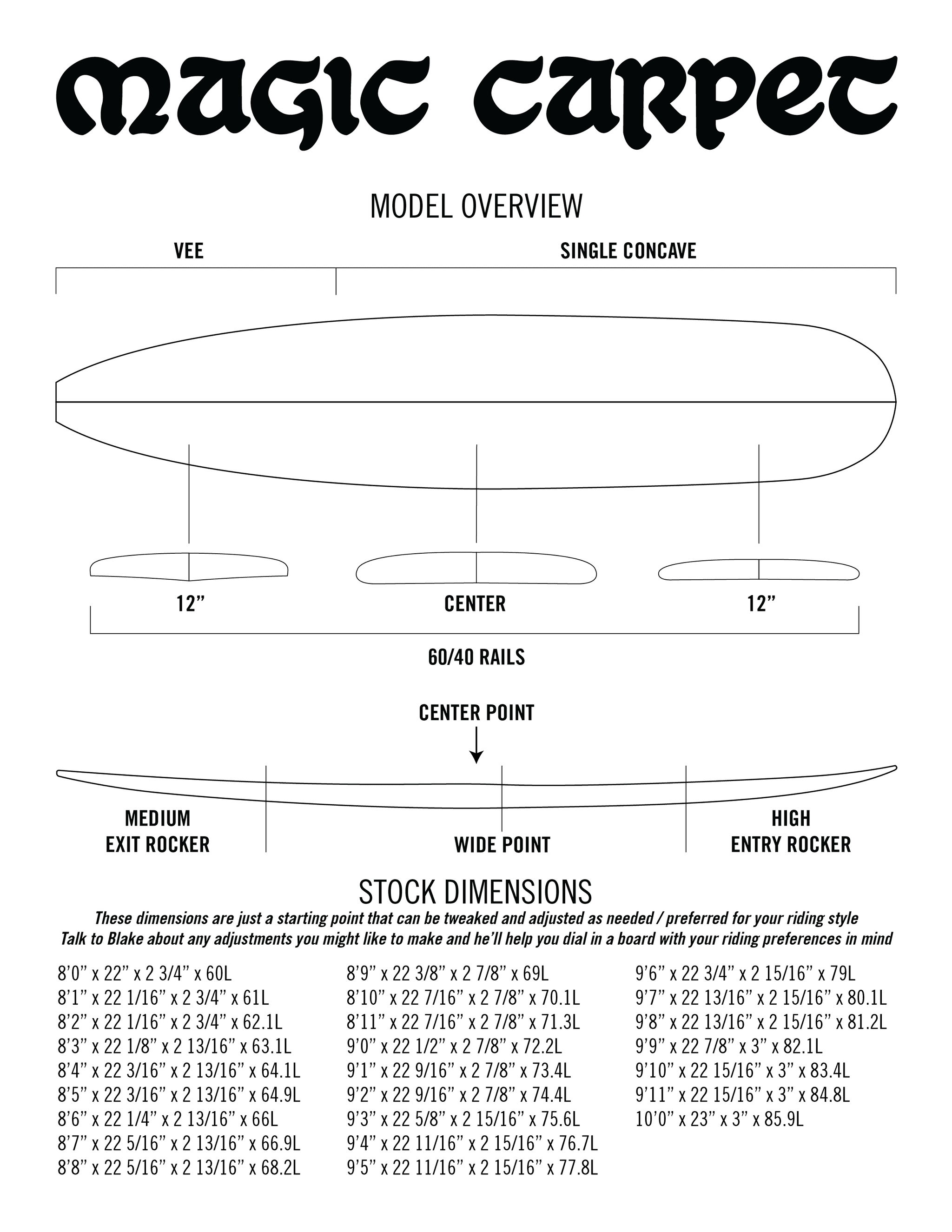
Build overview — rocker profile, rail shapes, fin positions. Hover any zone for the per-section call-outs.
THE DESIGN
High entry rocker through the nose lets the board engage steeper drops without pearling. A single concave runs through the front and middle of the bottom — it loads the lead foot through trim and adds a quiet drive panel under the center fin. Forward of the rear fin marks the contour rolls into vee panels through the tail; the vee releases water cleanly out of turns and lets the board fall onto rail when the rider commits. Medium exit rocker keeps the tail lively off the top rather than locking the board into pure straight-line trim.
THE RAILS
60/40 rails through the midsection — the modern-traditional rail treatment that holds a clean line and releases water predictably out of turns. The 2+1 fin marks sit 12" from each end of the board: pull the side-bites and ride it as a clean single-fin, add them in for drive when the wave asks for a tighter rail line.
STOCK DIMENSIONS
Stock dimensions are where we start. Longboards measure by length by width by thickness — we don't publish liters for boards in this category; longboard customers shop on L × W × T. The spec table also includes nose width and tail width measured 12" from each end, the longboard convention. Talk to Blake about any adjustments you'd like to make — he'll help you dial in a board with your riding preferences in mind.
| Length | Width | Thickness |
|---|---|---|
| 8'0" | 22" | 2 ¾" |
| 8'1" | 22 ¹⁄₁₆" | 2 ¾" |
| 8'2" | 22 ¹⁄₁₆" | 2 ¾" |
| 8'3" | 22 ⅛" | 2 ¹³⁄₁₆" |
| 8'4" | 22 ³⁄₁₆" | 2 ¹³⁄₁₆" |
| 8'5" | 22 ³⁄₁₆" | 2 ¹³⁄₁₆" |
| 8'6" | 22 ¼" | 2 ¹³⁄₁₆" |
| 8'7" | 22 ⁵⁄₁₆" | 2 ¹³⁄₁₆" |
| 8'8" | 22 ⁵⁄₁₆" | 2 ¹³⁄₁₆" |
| 8'9" | 22 ⅜" | 2 ⅞" |
| 8'10" | 22 ⁷⁄₁₆" | 2 ⅞" |
| 8'11" | 22 ⁷⁄₁₆" | 2 ⅞" |
| 9'0" | 22 ½" | 2 ⅞" |
| 9'1" | 22 ⁹⁄₁₆" | 2 ⅞" |
| 9'2" | 22 ⁹⁄₁₆" | 2 ⅞" |
| 9'3" | 22 ⅝" | 2 ¹⁵⁄₁₆" |
| 9'4" | 22 ¹¹⁄₁₆" | 2 ¹⁵⁄₁₆" |
| 9'5" | 22 ¹¹⁄₁₆" | 2 ¹⁵⁄₁₆" |
| 9'6" | 22 ¾" | 2 ¹⁵⁄₁₆" |
| 9'7" | 22 ¹³⁄₁₆" | 2 ¹⁵⁄₁₆" |
| 9'8" | 22 ¹³⁄₁₆" | 2 ¹⁵⁄₁₆" |
| 9'9" | 22 ⅞" | 3" |
| 9'10" | 22 ¹⁵⁄₁₆" | 3" |
| 9'11" | 22 ¹⁵⁄₁₆" | 3" |
| 10'0" | 23" | 3" |
+ How to think about dims
Length. Longer (10'0"+) adds glide and float but slows pivot turns; shorter (under 9'2") tightens the rail line and lets you turn from the tail at the expense of paddle. The 2+1 fin layout partly resolves the trade — pull the side-bites for clean traditional trim, add them in for tighter cornering — but the underlying outline is drawn for glide.
Width. Wider through the middle = more paddle and more trim stability; narrower = easier rail-to-rail and a tighter turn radius. The Magic Carpet runs around 23" in the core sizes, slightly wider than a traditional log to bias toward paddle and float.
Thickness. Thicker = more buoyancy and a drier deck on long sessions. 3" at the 9'4" pilot size is the Magic Carpet baseline; thinner reads if you want easier rail bury and faster transitions.
Between sizes? If you want pure noseriding lock-in on small days, lean toward the 9'4"–9'8" range with a rake fin in the center box. If you want a forgiving paddle platform for long, fat points, push out to 9'10"–10'4".
Don't see your size? Message Blake
FIN SETUP
2+1 setup. 10.5" Stavron center long box plus two side bite boxes (FCS II or Futures, your call). Magic Carpet's only longboard with side bites — the center single drives like a traditional longboard, the side bites add hold when the wave turns on.
Need help picking templates and brands? Read the fin guide, then start a conversation — Blake's happy to talk it through before you lock the build.
Recommended Fins
Longboards live in the rake band. SINGLE FIN templates ONLY. RAKED templates (rake / rake-leaning / mid-rake) require minimum 9.75" length per the Lundquist standard — drawn-out arcs that hold noseriding lines and trim through the wave. PIVOT-template longboard fins are acceptable at any length but ride differently — looser tail, less drawn-out arcs, more responsive (the rule auto-attaches explanatory copy to those picks so customers understand they're choosing a different riding style). LS-FIX-LONGBOARD-RAKE-PIVOT-AND-GLIDER-PHILOSOPHY (May 9, 2026) refined V4's blanket ≥9.75" rule.
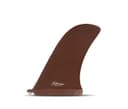
Rudder 10
10"· HoneycombLongboard Single / Mid-Rake
Futures's 10-inch longboard template — drawn-out arc with a clean foil. Pairs well with traditional longboards that want trim hold plus a touch of drive.
Shop Futures →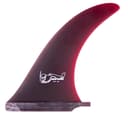
Greenough 4-A
9.75"· Solid FiberglassClassic Single / Mid-Rake
The classic Greenough longboard template — hand-foiled fiberglass that holds drawn-out arcs across the face. The True Ames pick when you want pedigree and feel.
Shop True Ames →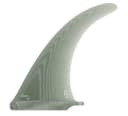
PHD Volan
10"· VolanPerformance Single / Rake-Leaning
Phil Edwards-template Volan single — long rake, drawn-out arc, pure trim feel. The drive-focused alt to the 4-A for surfers who want to turn harder.
Shop True Ames →Not sure which fin template is right for you? Rake, area, flex, and construction all change how a board feels.
Read the Complete Fin Guide →RAKE SPECTRUM
Where each recommended fin sits between drawn-out rake (heavier arcs, more hold) and tight pivot (vertical release, modern shortboard turning). Mid-rake (neutral) is the balanced default.
Drawn-out arcs. Power, hold, drive through long-line turns.
Balanced — drive plus pivot release. The everyday HPSB default.
Tight, vertical release. Modern shortboard pivot off the top.
- FCS IICustom — message Blakerake
 FuturesRudder 10mid-rake (neutral)
 True AmesGreenough 4-Amid-rake (neutral)
 True AmesPHD Volanrake-leaning
- NVSCustom — message Blakerake
On a longboard, the spectrum reads: rake + flex = trim, hold, and noseride stability. Pivot-leaning fins are personal-preference territory — they trade drawn-out arcs for a looser, more responsive feel. A different riding style than the classic raked single.
WHAT TO PICK
Longboards live in the rake band. SINGLE FIN templates only. RAKED templates require minimum 9.75" length per the Lundquist standard — drawn-out arcs that hold noseriding lines and trim through the wave. PIVOT-template longboard fins are acceptable at any length but ride differently — looser tail, less drawn-out arcs, more responsive. Per-fin picks for this model are coming — message Blake for current recommendations.
SPECS REFERENCE
Full Build Specifications
Stock dimensions, rocker, bottom contour, rail profile, fin positions, recommended fins by brand, and shaper notes for shapers and partner shops.
CONSTRUCTION & PRICING
Starting at $1,150 + tax
Every Magic Carpet is built to order in San Clemente. Pick a finish tier below; customize further in the next section.
Clear Resin Sanded
4-6 weeks
Functional finish, fastest turnaround. PU blank, polyester resin, sanded off the lam.
Resin Tint Sanded
6-8 weeks
Color both sides of the board in the lam, then sand it smooth.
Tint Gloss + Polish
8-10 weeks
Top-tier finish. Resin tint plus a gloss coat polished to show-quality.
Foam + Resin options
Customize your build
AESTHETIC
STRUCTURAL
TAIL VARIANTS
25% deposit today, balance due on completion. Timeline reflects current queue — confirmed on order.
Boards we've built
Recent customer builds — every Magic Carpet dialed to the rider.
1732219AT — Victor Lundquist (9'9 Brown Deck White Bottom + Rails)
2082201SR — Karissa (8'6 Dusty Pink)
2612201SR — Marlee Morris (9'0 Pink Deck Orange Bottom)
2622201SR (9'0 Light Blue)
3722312MH — Anthony Aguilera (9'0 Clear G+P)
GO DEEPER
Every construction call links to a full guide. Start with the essentials:
Board Details Checklist
Everything we need from you to begin your custom build.
Learn more →
Foam & Resin Types
Understanding the materials that make up your board's core and shell.
Learn more →
Fins — A Complete Guide
Single fins to thrusters, base systems, sizing by weight + wave, and how to pick across True Ames, NVS, Futures, and FCS.
Learn more →
Gloss + Polish vs Sanded Finish
The final touch that defines how your board looks and feels.
Learn more →
FREQUENTLY ASKED QUESTIONS
Sizing
Q: What size Magic Carpet should I order if I'm 5'10" and 175 pounds and I currently ride a 9'2" classic-log noserider?
A: I'd start the conversation around 9'4". You're already comfortable on a 9'2" log, so you don't need a longer board for paddle — the Magic Carpet is wider through the middle than a traditional log (around 23 1/4" at the pilot 9'4" size, slightly wider than a Fantasma-class log) so you'll get a paddle-and-glide upgrade without going longer. The 9'4" pilot also gives you the sweet spot for the side-bite drive — the side-bites do their best work in the 9'4"–9'8" range, where the rail line is short enough to turn from the tail. If your home break is consistently softer than knee-high, push to 9'6" or 9'8" for more glide. If you're spending a lot of time at Trestles or T-Street with real shape, 9'4" is the sweet spot.
`[BLAKE: ?]` Confirm pilot is 9'4" × 23 1/4" × 3" (canonical doc proposal) before shipping this answer publicly.
Fin setup
Q: Should I order the Magic Carpet as a 2+1 or a single-fin?
A: The Magic Carpet ships as a 2+1 — center single-fin box plus two side-bite plugs — and that's what I'd recommend for most riders. The 2+1 layout gives you both feels on the same board: pull the side-bites and you're trimming a clean traditional log on a single rake fin in the center box; add the side-bites back in and the tail tightens up for drive when the wave asks for a tighter rail line. Same shape, same rocker, two ride feels. The single-fin-only build makes sense if you're certain you want pure traditional-log trim and don't see yourself wanting drive on punchier days — you save a small amount on side-bite hardware and you commit to the trim feel. Specific fin templates (rake versus pivot in the center box, performance versus glass-on side-bites) are still being finalized across the lineup; once you start the order, I'll recommend templates based on your weight, stance, and the waves you're riding.
`[BLAKE: ?]` Body assumes Option A. Option-B flip: lead with "Magic Carpet ships as a single-fin — clean traditional-log trim. The 2+1 configuration is offered as an option at order time."
Wave-range fit
Q: Will the Magic Carpet work for me at my home break in shoulder-high reefbreak surf?
A: Yes — that's actually the upper end of what the Magic Carpet is designed for. Ankle-to-shoulder is the working band; ideal is knee-to-chest. The 2+1 layout earns its keep at shoulder-high reef specifically: the side-bites add the rail-engagement you want when the wave actually has shape and push, and the center single-fin box holds a clean trim line through the flatter sections between sets. Once the surf gets above shoulder-high with real push, a longboard isn't the right tool — the rail line is too long and the rocker isn't tuned for steep drops. For overhead-plus surf with push, that's a different category of board. But everything from a clean chest-high south at T-Street through head-high shoulder reef is in the Magic Carpet's wheelhouse, especially with the side-bites in.
Bottom contour (single concave → vee)
Q: What's going on with the bottom contour? Your contour diagram shows "SINGLE CONCAVE" through the front and "VEE" through the tail — why the transition?
A: Good catch. The single concave through the front and middle of the board does two things: it loads the lead foot during trim — gives you a clean, flat surface to push off — and it adds a quiet drive panel under the center fin when the side-bites are out. The vee panels through the tail release water cleanly out of turns, which is what lets the board fall onto rail when you commit to a turn rather than tracking through. The transition between them is what gives the Magic Carpet its dual personality: trim it on the front half of the board and you're feeling the single-concave drive; lean into a turn off the tail and the vee panels release. It's also why the side-bites work as well as they do — the vee tail wants to be turned, and the side-bite plugs are positioned right where the vee panels start (about 12" from the tail). If you're used to a flat-bottom or a pure belly-bottom log, the Magic Carpet will feel slightly more responsive off the tail without losing the trim feeling on the rail line.
`[BLAKE: ?]` This answer assumes the contour diagram is canonical. If the §0.2 page-copy.md reconciliation resolves toward "diagram labels need re-export" (i.e., the canonical doc's "low-entry rocker / hull-bottom" reading wins), this whole answer needs a rewrite.
Skill-level fit
Q: I've been longboarding for two years on a foam log and I'm ready for a real longboard. Is the Magic Carpet too much board for me?
A: Probably not, if you're patient with yourself. The Magic Carpet is forgiving enough for a confident beginner stepping up — the low-rocker outline, the wide pilot dim, and the soft 60/40 rails all work together to keep the board predictable underfoot. The piece that's slightly above a beginner brief is the side-bite drive itself: when the side-bites are in, the tail responds faster than a foam log will, and that rewards riders with intermediate-or-better foot positioning. So my recommendation is: start with the side-bites out for the first month or two — ride it as a clean single-fin and focus on trim and noseriding fundamentals. Once you're comfortable turning from the rail rather than the tail, swap the side-bites in and you'll feel the difference. That's the path I'd send someone two years into longboarding down. Intermediate-and-up riders can run side-bites from day one without much adjustment.
`[BLAKE: ?]` Confirm "intermediate–advanced; beginner-friendly with caveats" framing — current `magic-carpet.md` §"Voice + Positioning" says "intermediate–advanced; forgiving for confident beginners."
Build turnaround / process
Q: How long does a custom Magic Carpet take to build?
A: Depends on the finish tier and where the queue sits when you order. The clear-resin sanded build is the fastest — typically 4–6 weeks from deposit to shipped. Resin-tint sanded usually runs 6–8 weeks because tint requires a more careful lam process. Tint + gloss + polish — the show-quality finish, and the one I recommend for the Magic Carpet because it's the classic log presentation — runs 8–10 weeks because of the gloss coat and polish stages. Timeline reflects current queue, so confirmed lead time goes on the order confirmation, not the website. If you need a board for a specific surf trip, mention the trip date when you start the order and I'll work backward to make sure it ships in time.
`[BLAKE: ?]` Confirm 4–6 / 6–8 / 8–10 week longboard timeline anchors (inherited from sitewide template; longboard cadence may differ).
Comparable competitor frame
Q: How does the Magic Carpet compare to a Takayama Scorpion II or a Bing California Pintail?
A: They're in the same family — modern 2+1 longboards designed for paddle, trim, and side-bite drive — and each has its own bias. The Scorpion II is closer to performance-leaning: it'll turn faster through the pocket and reward harder driving turns, which makes it a favorite of contest-leaning longboarders. The California Pintail is closer to traditional-leaning: it has a tighter pintail outline that holds a long line at the cost of some pivot. The Magic Carpet sits in between — wider through the middle than either for paddle priority, with a round-pin tail (rather than a pintail) that holds trim cleanly without locking out turns. Where the Magic Carpet differentiates is the contour package — the single-concave-to-vee transition gives you a quieter trim feel than the Scorpion II and a livelier tail than the Pintail. None of this is a knock on those boards; they're great. The Magic Carpet is what I'd pick when I want the glide-and-trim emphasis without giving up the option of side-bite drive on a punchier day.
`[BLAKE: ?]` Confirm Top 3 competitor anchors per `descriptions.md` §7 — Walden Magic Model is naming-overlap risk and is intentionally omitted from this answer.
Glassing options
Q: What's the standard glassing schedule on a Magic Carpet, and what should I think about before deviating?
A: Standard is 6oz S-cloth + 4oz E-cloth top and bottom — heavier than shortboard glass because longboard rails take more flex cycles and the deck handles the noseriding load. That schedule gives you durability and the feel most riders expect from a real longboard. Deviating up (heavier glass) makes sense if you're a heavier rider or you ride hard enough that you're folding boards — bumping the deck to 8S+4E is the next stop. Deviating down (lighter glass) makes sense if you're a lighter rider and you want the board to feel a little more responsive — 6S deck + 6E bottom drops a few ounces and gives you a slightly livelier ride at the cost of some long-term durability. For first-time buyers I default to the 6S+4E top and bottom unless they specifically ask. The volan tail patch (+$40) is the one add-on I'd recommend almost every time on the Magic Carpet — classic log construction signal, and it protects the area of the deck that takes the most abuse.
`[BLAKE: ?]` Confirm 6S+4E top + bottom default for Magic Carpet — `magic-carpet.construction.md` §6 has a note questioning whether to lighten for a more performance-tilted 2+1 build.
Cross-reference
- Canonical context: `magic-carpet.md` - Page-copy spec: `magic-carpet.page-copy.md` (§3.5 contour PNG findings; §3.8 stock-dim block; §3.10 construction + pricing) - SEO + JSON-LD: `magic-carpet.seo.md` (§3 FAQPage block has the schema-formatted JSON-LD versions of Q1, Q2, Q3, Q6 above; §3 needs a refresh pass when the eight Q&As here finalize) - Compiled blockers: `magic-carpet.blockers.md` (every `[BLAKE: ?]` in this file is rolled up there)
MORE SHORTBOARDS
EXPLORE THE LINEUP
Innuendo
shortboard
Salt Burn
twin fin
Spectre
mid length
Fantasma
longboard
Scorpio
shortboard
Talisman (Mini Gun)
gun
Dutchman
glider
Rage
wake surf
2nd to None
shortboard
Suds
twin fin
Esplanade
mid length
Black Pearl
longboard
Talisman (Step Up)
shortboard
Talisman (Gun)
gun
Wake Surf #2
wake surf
Gumball
shortboard
Revenant
twin fin
Sea Bottom
shortboard
Lunada
longboard
Five Horizons
shortboard
Pin Twin
twin fin
Whip-Stitch
mid length
Big Joe
longboard
Wanted
shortboard
Duppy
twin fin
Serenata
mid length
Legacy
longboard
Gold
shortboard
Lucid
twin fin
Hiatus
mid length
Magic Carpet
longboard
Moon Shine
shortboard
Boomerang
twin fin
Apparition
shortboard
Half-Moon
twin fin
Bang!
shortboard
Aardvark
twin fin
Lasso
shortboard
Acid-Drop
twin fin
Popsicle Stick
shortboard
Big Buoy
shortboard
Pegasus
longboard
COMPLETE THE QUIVER
“Surf Everyday” means a board for every condition. Your Magic Carpet covers ankle-high to shoulder-high— here's what rounds out the quiver.

Fantasma— Longboard
Sister longboard in the Lundquist line — different rocker, foil, and outline character. See the Fantasma page for the full breakdown.
Learn more →

Black Pearl— Longboard
Sister longboard in the Lundquist line — different rocker, foil, and outline character. See the Black Pearl page for the full breakdown.
Learn more →

Lunada— Longboard
Sister longboard in the Lundquist line — different rocker, foil, and outline character. See the Lunada page for the full breakdown.
Learn more →
Building a quiver around the Magic Carpet? Start a conversation — we'll build the right boards for how and where you actually surf.
More boards live in the website catalog than at the shop. Visits are by appointment — text or call (949) 750-5067 to look at boards in person or start a custom build.
READY TO START?
Every Magic Carpet is built to order in San Clemente — 4–6 weeks on clear-sanded, 6–8 weeks gloss and polish, 8–10 weeks tint-sanded. 25% deposit.
Shop: 106 W Mariposa Unit B, San Clemente, CA 92672
By appointment · 8am–8pm daily · (949) 750-5067