
Aardvark
A turn-first modern twin that digs into the pocket and pivots off the back foot.
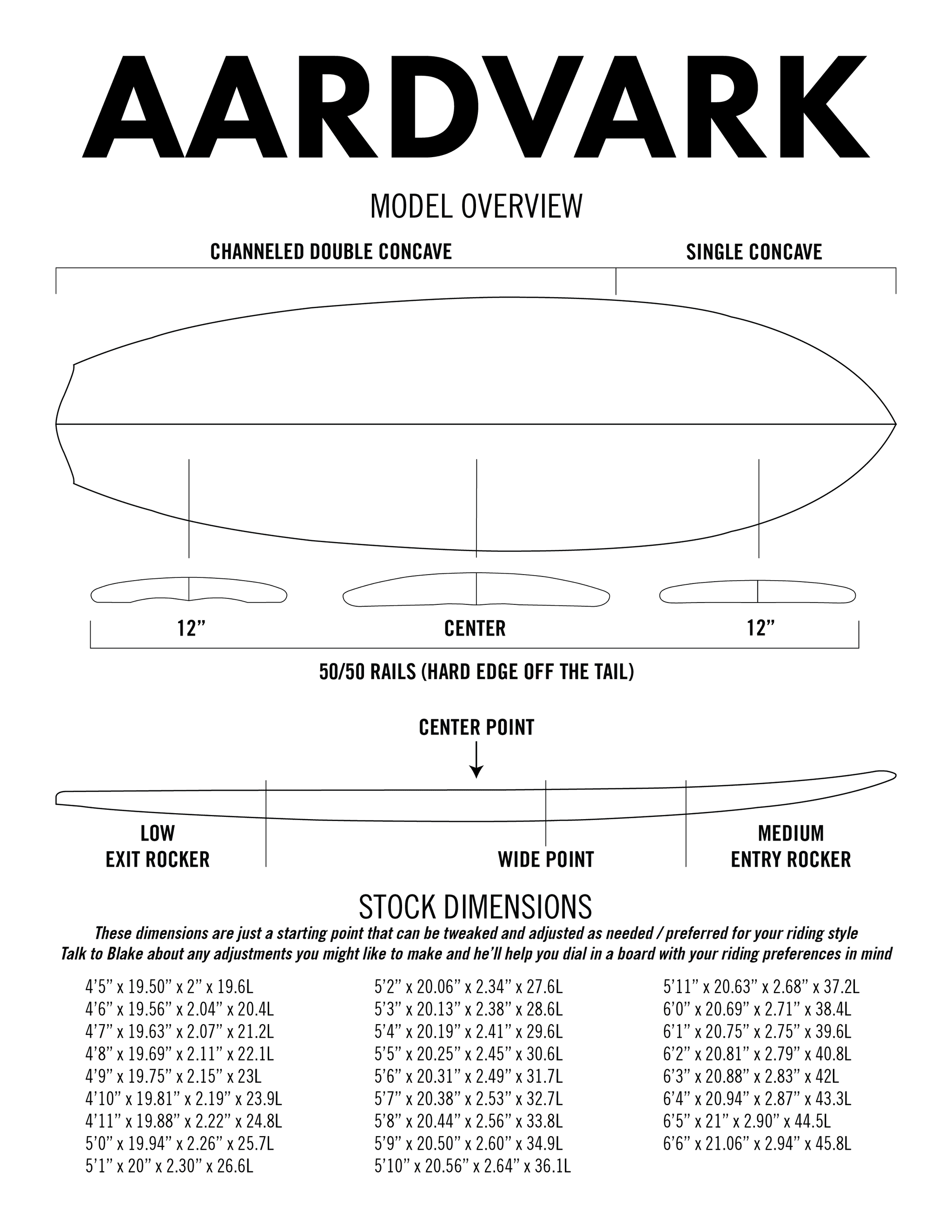
The Aardvark is a turn-first modern twin. Through the front and center of the board, a channeled double concave loads the rail with drive — water tracks through the channels and stays attached to the bottom even when the board sits flat off the back foot. Behind the fins, the bottom transitions to a single concave that releases cleanly under the back foot, which is what makes the snap feel crisp instead of skatey. Medium entry rocker handles steeper drops without bogging; low exit rocker keeps the board projecting through the flat middle of a wave. 50/50 rails through the midsection give a forgiving rail-to-rail feel; a hard edge through the last 12" of the tail releases water on demand at speed.
WHAT IT WANTS
Clean waist-to-head surf with shape — beach break, point, or reef with some push. Twin fins want a face to drive off; dead-flat mush won't bring the shape alive. Punches above its weight at Lowers, Salt Creek, and the smaller-day Mentawais.
SKILL LEVEL
Intermediates and advanced surfers wanting twinzer hold without the full thruster footprint.
WHAT IT'S NOT
Not a flat-day groveler — for knee-high mush, a wider and flatter shape will paddle and plane better. Not a hollow-reef board either; when the surf gets big and heavy, a dedicated shortboard or step-up will give you more control.
BUILD DETAILS
Build overview — rocker profile, rail shapes, fin positions. Hover any zone for the per-section call-outs.
WHERE IT WORKS
The Aardvark belongs in clean, organized waves with shape. Around home it earns its keep at Salt Creek on a south swell, T-Street ramps on a glassy morning, and Trestles cutbacks when Lowers is doing its mid-range thing. On a surf trip it suits mainland-Mexico point surf where the wave has a face but you want vertical opportunities rather than a single drawn-out line — Saladita on a building day, or the inside section at Punta de Mita where the wave funnels and a pivot-oriented twin earns its rail. The combination of channels forward and a clean release tail wants a face with shape; in soft, formless surf the design's drive has nothing to load against.
WHO IT'S FOR
Intermediate-to-advanced twin-fin riders who value pivot, response, and pocket time over straight-line speed. The Aardvark is built around the back foot — a board that rewards weighting the tail, holding the inside line, and re-engaging the fins on demand. It is not a knee-high grovel weapon; twin fins built for that job run wider, flatter, and lower-rockered. And it is not a one-board quiver either — when the surf gets overhead and stacked, a thruster step-up handles the heavier push. Sized 0–2 inches shorter and 1–3 liters lower than your daily thruster.
THE DESIGN
A twin fin trades the all-conditions versatility of a thruster for speed off the bottom and looseness through turns. Wider plan-shapes than a shortboard at the same length pull the wide point forward, with a fast back third built around the fin cluster.
THE RAILS
Forgiving rail-to-rail feel with hard tail rails for clean release at speed. Mid-rails stay soft for trim hold; rail thickness flexes by length and rider intent.
Custom builds are tuned to your dims and surfing style. Talk to Blake about specifics.
+ Not sure which size? Calculate your volume
Volumes are starting points, not rulebooks. Conditions, stance, and style all shift the math.
STOCK DIMENSIONS
The Aardvark's featured size set sits in the 26–35L volume band — the same band most modern twin fins live in for a 150–200lb rider on chest-to-head surf. Volume is shown alongside length, width, and thickness because volume is what actually predicts paddle and plane; two boards with identical L/W/T can ride very differently if their foam distribution diverges. Sizes step in 1-inch length increments. If you sit at the edge of the band, expand the table to "All sizes" to see the 4'5"–6'6" full range.
Featured sizes cover the core-liters range (26–35L) most of our customers land in. Need a size outside the band? Expand All sizes or start a custom order for a specific dim.
| Length | Width | Thickness | Volume |
|---|---|---|---|
| 5'0" | 19.94" | 2.26" | 25.7L |
| 5'1" | 20.00" | 2.30" | 26.6L |
| 5'2" | 20.06" | 2.34" | 27.6L |
| 5'3" | 20.13" | 2.38" | 28.6L |
| 5'4" | 20.19" | 2.41" | 29.6L |
| 5'5" | 20.25" | 2.45" | 30.6L |
| 5'6" | 20.31" | 2.49" | 31.7L |
| 5'7" | 20.38" | 2.53" | 32.7L |
| 5'8" | 20.44" | 2.56" | 33.8L |
| 5'9" | 20.50" | 2.60" | 34.9L |
+ How to think about dims
Length. Longer = more rail line in the water (drives through a turn, holds through flat sections, paddles better). Shorter = quicker rail-to-rail, tighter in the pocket, gives up some drive.
Width. Narrower = holds a line in clean, fast waves; faster rail-to-rail. Wider = paddles better, more stable in softer surf, sits flatter on rail.
Thickness / volume. More volume = more paddle and more margin on soft days. Less volume = sensitive underfoot; rails sink cleanly; turns feel crisper. Most riders sit 0–2 inches shorter and 1–3 liters lower than their go-to thruster.
Wave-range trade. Twin fins generally start to lose themselves around solid overhead — the fins want to release, and release in a heavy wave reads as "spinning out." If your home break runs mostly overhead, size the Aardvark as a small-wave companion to a thruster, not a one-board quiver.
Between sizes? We usually size up in volume (not length) for softer waves, and down in volume for cleaner, faster surf.
Don't see your size? Message Blake
FIN SETUP
Twinzer setup. Futures boxes. Two larger main twin fins plus two small canard fins ahead of the mains — four fins total, twinzer geometry. The canards add hold and drive without the full footprint of a thruster. Twin-only setup also available if you want the simpler config.
Need help picking templates? Read the fin guide, then start a conversation — Blake's happy to talk it through before you lock the build.
Recommended Fins
Twin fins live mid-rake to rake-leaning. Drive and looseness both want side fins to hold a long arc rather than pivot tight. Lean rake for fattier point break and longer carves; sit nearer mid-rake for punchier beach break. V4 Part B: 2 picks per brand spanning mid-rake (modern keel for punchier surf) and rake-leaning (classic keel for fattier walls).
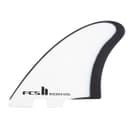
JS Modern Keel
M-L· Performance GlassModern Keel / Mid-Rake
A modern keel template tuned for the JS twin-fin shapes. Drive and hold across long-line carves with a clean release off the top — the punchier-surf pick.
Shop FCS II →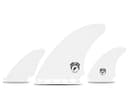
Mayhem Twinzer
L· HoneycombTwinzer / Mid-Rake
Matt Biolos's twinzer cluster — the small canard outboard adds bite and projection to the modern twin without flattening the looseness.
Shop Futures →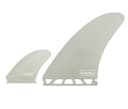
Knost Twinzer
· HoneycombClassic Keel / Rake-Leaning
Alex Knost's twinzer — fuller-foiled keels with more rake than the Mayhem. The right pick for fattier walls where you want sustained drive and a longer arc.
Shop Futures →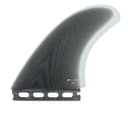
TA Twin
· Solid FiberglassModern Twin / Mid-Rake
True Ames's house twin keel — hand-foiled solid fiberglass with classic mid-rake drive. The pure-feel twin pick for retro twin shapes that want trim character and a long arc.
Shop True Ames →
Furrow Twinzer
· Solid FiberglassTwinzer / Rake-Leaning
Hand-foiled fiberglass twinzer set — main keels paired with small canards for added projection. More drive than the TA Twin; a step closer to a full keel feel for fattier surf.
Shop True Ames →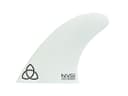
Nautilus Twin
· ApexModern Twin / Mid-Rake
NVS's flagship twin. Hand-foiled fiberglass keel set with smooth mid-rake drive — runs as a glass-on (no box) for a pure-feel build.
Shop NVS →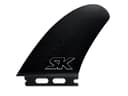
Stu Kenson Twinzer
· ApexTwinzer / Rake-Leaning
Stu Kenson's collab — hand-foiled fiberglass twinzer with rake-leaning template tuned for held-rail drive on fattier walls. The drive-focused alt to the Nautilus.
Shop NVS →Not sure which fin template is right for you? Rake, area, flex, and construction all change how a board feels.
Read the Complete Fin Guide →RAKE SPECTRUM
Where each recommended fin sits between drawn-out rake (heavier arcs, more hold) and tight pivot (vertical release, modern shortboard turning). Mid-rake (neutral) is the balanced default.
Drawn-out arcs. Power, hold, drive through long-line turns.
Balanced — drive plus pivot release. The everyday HPSB default.
Tight, vertical release. Modern shortboard pivot off the top.
 FCS IIJS Modern Keelmid-rake (neutral)
 FuturesMayhem Twinzermid-rake (neutral)
 FuturesKnost Twinzerrake-leaning
 True AmesTA Twinmid-rake (neutral)
 True AmesFurrow Twinzerrake-leaning
 NVSNautilus Twinmid-rake (neutral)
 NVSStu Kenson Twinzerrake-leaning
On a twin fin, the spectrum reads: rake = sustained drive and trim speed in fattier waves; mid-rake = the everyday pick that still releases off the top. Pivot-leaning twins exist but are rare.
WHAT TO PICK
Twin fins live mid-rake to rake-leaning. Drive and looseness both want the side fins to hold a long arc rather than pivot tight. Lean rake for fattier, drawn-out point break and longer carves; sit nearer mid-rake when you want a touch more release on punchy beach break. Per-fin picks for this model are coming — message Blake for current recommendations.
SPECS REFERENCE
Full Build Specifications
Stock dimensions, rocker, bottom contour, rail profile, fin positions, recommended fins by brand, and shaper notes for shapers and partner shops.
AVAILABLE IN THE SHOP
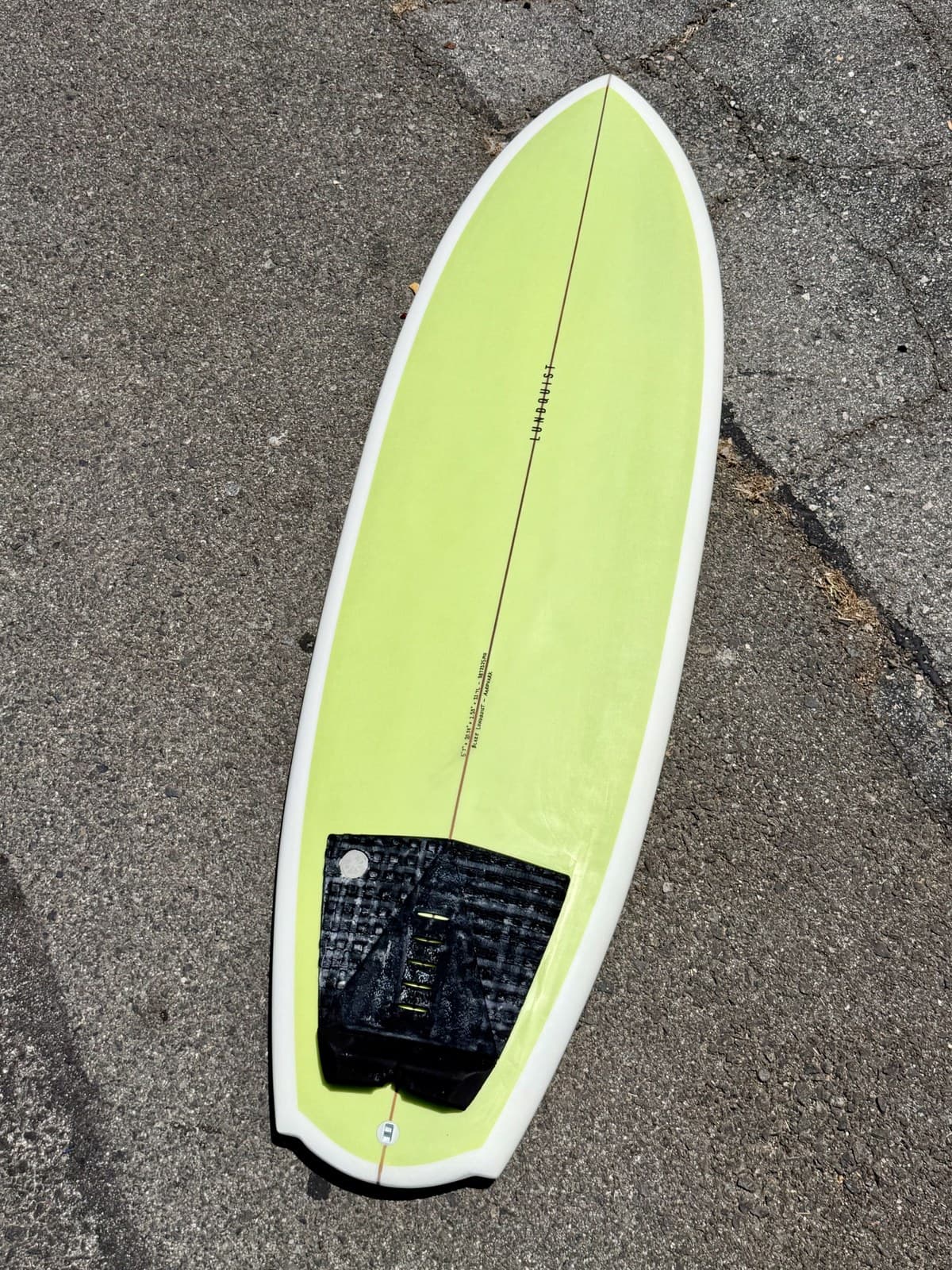
Ready to ride. Stop by San Clemente or message us to claim one — they move fast.
CONSTRUCTION & PRICING
Starting at $750 + tax
Every Aardvark is built to order in San Clemente. Pick a finish tier below; customize further in the next section.
Clear Resin Sanded
4-6 weeks
Functional finish, fastest turnaround. PU blank, polyester resin, sanded off the lam.
Resin Tint Sanded
6-8 weeks
Color both sides of the board in the lam, then sand it smooth.
Tint Gloss + Polish
8-10 weeks
Top-tier finish. Resin tint plus a gloss coat polished to show-quality.
Foam + Resin options
Customize your build
AESTHETIC
STRUCTURAL
25% deposit today, balance due on completion. Timeline reflects current queue — confirmed on order.
Boards we've built
Recent customer builds — every Aardvark dialed to the rider.
5'7 Aardvark (3872325MH)
3882325MH (5'5 Teal Deck)
3892325MH (5'9 Blue Deck)
3902325MH (6'0 Orange Deck)
GO DEEPER
Every construction call links to a full guide. Start with the essentials:
Board Details Checklist
Everything we need from you to begin your custom build.
Learn more →
Foam & Resin Types
Understanding the materials that make up your board's core and shell.
Learn more →
Fins — A Complete Guide
Single fins to thrusters, base systems, sizing by weight + wave, and how to pick across True Ames, NVS, Futures, and FCS.
Learn more →
Gloss + Polish vs Sanded Finish
The final touch that defines how your board looks and feels.
Learn more →
FREQUENTLY ASKED QUESTIONS
What size Aardvark should I order?
The honest answer: most riders sit 0–2 inches shorter and 1–3 liters lower than their go-to thruster. The Aardvark wants the release a twin fin is built for, and a heavier / longer board starts trading that release away for paddle.
If you're a 150–180lb intermediate-to-advanced surfer who rides a ~6'0" thruster around 30L, your Aardvark size is probably 5'8"–5'10" in the 31–35L range. Lighter riders or surfers who prefer a more sensitive feel underfoot can drop to 5'5"–5'7" / 30L. Heavier riders and anyone biased toward paddle / margin can step up to 5'10"–6'0" / 35–38L. The full stock catalog runs 4'5" through 6'6" in 1-inch increments, so the band is wider than the featured set if you sit at the edges. If you're between sizes, message me and we'll talk about the waves you actually surf, not the ones you hope to.
Why the channeled double concave forward and single concave behind?
The two contours do different jobs.
The channels and double concave through the front and middle of the board load the rail with drive — water tracks through the channels and stays attached to the bottom even when the board sits flat off the back foot. That keeps the Aardvark from feeling skatey through the middle of a turn; the channels give the board something to push against.
Behind the fins, the bottom transitions to a single concave that releases cleanly when you weight the back foot. That release is what makes the snap feel crisp. If the channels ran all the way through the tail, the board would drive but resist coming around — you'd lose the pivot the Aardvark is built for. The transition is deliberate.
Twin or twinzer — which should I order?
Twin is the canonical setup. Two fins, deep release, weight off the back foot to pivot. It's what the Aardvark is designed around and what most riders should order.
Twinzer (twin + two small leading canards) adds a touch more drive forward without giving up the twin release at the tail. It's a $30 upcharge and worth considering if you ride twins with a complaint that the standard twin feels too loose or skates out at speed — the canards give you something extra to push against on a long, drawn- out line. There's precedent in the inventory: one Aardvark in the shop ships in twinzer.
If you've never ridden a twinzer before and you ride twins comfortably, start with the standard twin. If you've owned a twin and wanted more drive, twinzer is the right add-on.
What waves does the Aardvark actually like?
Clean, organized waves with shape. Around home that means Salt Creek on a south swell, T-Street on a glassy morning, Trestles cutbacks when Lowers is doing its mid-range thing — chest-to-head with a face that holds.
On a surf trip the Aardvark belongs at mainland-Mexico point surf with vertical opportunities — Saladita on a building day, the inside section at Punta de Mita where the wave funnels. Anywhere the wave has push but you want to break it into pivots rather than draw one long line through it.
It's not a knee-high grovel weapon — twin fins built for that job run wider, flatter, and lower-rockered. And when the surf gets to solid overhead with real push, the twin-fin release starts reading as "spinning out" — at that point a thruster step-up handles the heavier wave better. The Aardvark's sweet spot is roughly waist-to- head with shape.
I'm a strong intermediate. Is this too much board for me?
Probably not, but it depends on what you've been riding and where.
The Aardvark is built around the back foot. If you're an intermediate who already weights the back foot consistently — you hold rail through cutbacks, you don't bog the tail when you commit to the inside line — you'll get the Aardvark immediately. The board rewards exactly that input.
If you're newer to surfing and still finding your stance, the Aardvark will feel sensitive in a way that punishes timing errors. The hard-edged release tail wants commitment; if you're tentative on the back foot, the board won't pivot, it'll wash. In that case, something flatter and wider is a better fit until your back-foot weighting becomes second nature.
The honest answer: if you're a strong intermediate getting confident with rail-to-rail surfing in the chest-to-head range, the Aardvark is in scope. If you're earlier than that, it's the wrong board.
How does the Aardvark compare to a CI Two Happy Twin or an Album Insanity?
Honest comparable framing — the modern-twin design space is broad enough that no two boards in it ride the same way.
The CI Two Happy Twin is a performance modern twin biased toward drive — a shortboard-derived twin envelope with modern rocker. CI's twin family wants you projecting through long lines; the Aardvark is biased the other direction, toward pivot and pocket time. Same volume range, different design intent.
The Album Insanity is the closer published match — turn-first modern twin with deep swallow and modern rocker. The Aardvark and the Insanity are in roughly the same camp on intent. Where they diverge: my proposed Aardvark contour runs medium entry rocker with a channeled double-concave forward, where Album typically runs flatter rocker with a single-to-double bottom. Different drive feel, similar release on the tail.
If you've ridden both, your read on which one fits you better will do more for your decision than any spec-sheet comparison. If you're choosing between an Aardvark and one of those, message me and I'll talk through the difference for the waves you actually surf.
What glass schedule should I get? PU/poly or EPS/epoxy?
Both work; the choice is about feel and durability, not performance ceiling.
PU blank with polyester resin is the default. It's what most production shortboards have ridden on for forty years. Slightly heavier per-cubic-inch than EPS; gives the board a familiar flex, weight, and ding-pattern. If you've ridden any factory-glassed shortboard from CI, Pyzel, JS, etc., you've ridden PU/poly.
EPS blank with epoxy resin is a $175 add-on. Lighter per-cubic-inch, which means a board with the same dims paddles slightly easier and feels livelier through the air on top turns. The flex is stiffer; EPS resists pressure dings better than PU. The trade is feel — some riders love the EPS livelier feel, others find it floaty or unresponsive at speed.
For the Aardvark specifically: I'd default to PU/poly for the back-foot pivot the design wants — the slightly softer flex helps you load the rail through a turn. EPS is the right pick if you want a lighter, more durable build for travel.
What's the build timeline, and can I see one before I order?
Built-to-order timelines run 3–6 weeks for clear-sanded, 6–8 weeks for tint with gloss + polish, and 8–10 weeks for tint sanded. Those windows reflect the current shop queue and get confirmed at order time. A 25% deposit holds your slot; the balance is due on completion.
Try-before-you-buy: I don't currently run a formal demo program, but the shop is in San Clemente at 106 W Mariposa Unit B and I keep in-progress and finished boards around. If you want to come see an Aardvark before you commit, message me and we'll set up a time. Sometimes there's a customer board ready to ship that you can hold, sight-unseen test-paddle, or at least spec against in person.
When an Aardvark inventory board exists (used or new), it shows up on the model page's stock list. Right now there's a used 5'7" twinzer-spec Aardvark in the shop — the only in-stock Aardvark as of this writing. If you want to see that one specifically, message me before you make the drive.
Open Decision-Gating Items
- [ ] Voice review — confirm the tone reads as Blake's. The default is plain, hydrodynamic, no clichés. If specific phrasings feel off, mark them and I'll redraft. - [ ] Q1 weight bands — confirm 150–180lb / 30L thruster as the reference rider, or supply Blake's preferred reference frame. - [ ] Q5 skill-level cutoff — confirm "strong intermediate weighting the back foot consistently" as the floor; widen or narrow per Blake's read. - [ ] Q6 competitor comparisons — CI Two Happy Twin + Album Insanity are the two named competitors. Both are draft; `descriptions.md` §6 has 12 candidates and Blake's primary-source ✅/⚠️/❌ pass should drive which two anchor the FAQ comparison. - [ ] Q7 PU/poly default recommendation — confirm PU as the Aardvark default vs EPS. The recommendation reflects the back-foot-pivot design intent but should match Blake's actual build preference. - [ ] Q8 demo policy — confirm the "no formal demo program, but come by the shop" framing matches current Lundquist policy.
MORE SHORTBOARDS
EXPLORE THE LINEUP
Innuendo
shortboard
Salt Burn
twin fin
Spectre
mid length
Fantasma
longboard
Scorpio
shortboard
Talisman (Mini Gun)
gun
Dutchman
glider
Rage
wake surf
2nd to None
shortboard
Suds
twin fin
Esplanade
mid length
Black Pearl
longboard
Talisman (Step Up)
shortboard
Talisman (Gun)
gun
Wake Surf #2
wake surf
Gumball
shortboard
Revenant
twin fin
Sea Bottom
shortboard
Lunada
longboard
Five Horizons
shortboard
Pin Twin
twin fin
Whip-Stitch
mid length
Big Joe
longboard
Wanted
shortboard
Duppy
twin fin
Serenata
mid length
Legacy
longboard
Gold
shortboard
Lucid
twin fin
Hiatus
mid length
Magic Carpet
longboard
Moon Shine
shortboard
Boomerang
twin fin
Apparition
shortboard
Half-Moon
twin fin
Bang!
shortboard
Aardvark
twin fin
Lasso
shortboard
Acid-Drop
twin fin
Popsicle Stick
shortboard
Big Buoy
shortboard
Pegasus
longboard
COMPLETE THE QUIVER
“Surf Everyday” means a board for every condition. Your Aardvark covers chest-high to head-high— here's what rounds out the quiver.
Salt Burn
Salt Burn— Twin Fin
Sister twin fin in the Lundquist line — different rocker, foil, and outline character. See the Salt Burn page for the full breakdown.
Learn more →

Suds— Twin Fin
Sister twin fin in the Lundquist line — different rocker, foil, and outline character. See the Suds page for the full breakdown.
Learn more →

Revenant— Twin Fin
Sister twin fin in the Lundquist line — different rocker, foil, and outline character. See the Revenant page for the full breakdown.
Learn more →
Building a quiver around the Aardvark? Start a conversation — we'll build the right boards for how and where you actually surf.
More boards live in the website catalog than at the shop. Visits are by appointment — text or call (949) 750-5067 to look at boards in person or start a custom build.
READY TO START?
Every Aardvark is built to order in San Clemente — 4–6 weeks on clear-sanded, 6–8 weeks gloss and polish, 8–10 weeks tint-sanded. 25% deposit.
Shop: 106 W Mariposa Unit B, San Clemente, CA 92672
By appointment · 8am–8pm daily · (949) 750-5067